What Does No Charge Scheduled Mean on My EV?
“No Charge Scheduled” on your EV means the car is plugged in but waiting for instructions that don’t exist. Here’s what it means and how to start charging immediately on any EV brand.
Dashboard warnings and charging error codes can look alarming, but many clear on their own or need only a simple check. This section explains what each common light and code actually means, in plain language, and when it is serious enough to stop driving. See what the EV battery warning light means for a general overview, whether cold weather causes false warnings, and EV charging error code 26 or Nissan Leaf code P3101 for two specific codes. Brand-specific lights are in brand-specific battery problems.
“No Charge Scheduled” on your EV means the car is plugged in but waiting for instructions that don’t exist. Here’s what it means and how to start charging immediately on any EV brand.
Your Toyota bZ4X has a battery warning light on. Here’s every bZ4X battery warning explained — cold weather limits, EV system warnings, red faults — with specific diagnostic steps and what Toyota’s warranty covers.
Every EV warning light explained — what each icon means, how urgent it is, and whether you can keep driving. Complete guide covering Tesla, Chevy Bolt, Nissan Leaf, Hyundai, Kia, Ford, VW, and Rivian.
Your Ford F-150 Lightning has a battery warning light. Here’s every Lightning battery warning explained — “Propulsion Power Reduced,” “Battery System Fault,” Pro Power faults — with specific diagnostic steps for each one.
Chevy Bolt P1E00 fault code — what it means, its connection to the Bolt battery recall, how serious it is, and exactly what to do whether your recall is complete or still open.

Your Chevy Bolt shows P1E00 fault code — the battery system fault tied to the Bolt recall. Here’s exactly what P1E00 means, the recall connection, what to do right now, and how to handle it under warranty.

Your Tesla shows BMS_a066 error code. Here’s exactly what it means, why it happens, how serious it is, what Tesla service does to fix it, and whether it’s covered under warranty.
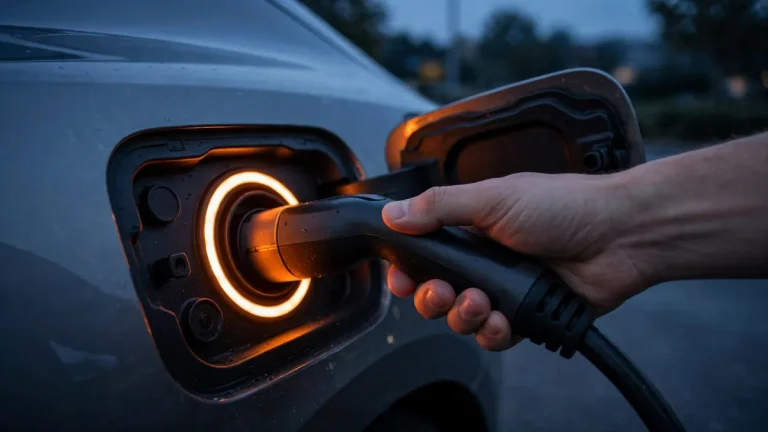
Your Tesla shows CP_a139 — the charge port latch fault code. Here’s exactly what it means, why it happens, and step-by-step fixes including the app release command, reboot procedure, and manual emergency release.
Your EV shows “Battery Power Reduced” and feels sluggish. Here’s every cause — cold battery, overheating, cell faults, critically low charge — and exactly how to restore full power for each one.
How to read EV battery fault codes with an OBD2 scanner — the right adapter for every EV brand, the best diagnostic apps, step-by-step instructions, and how to interpret what you find.