Why Does My EV Have a Dead 12V Battery?

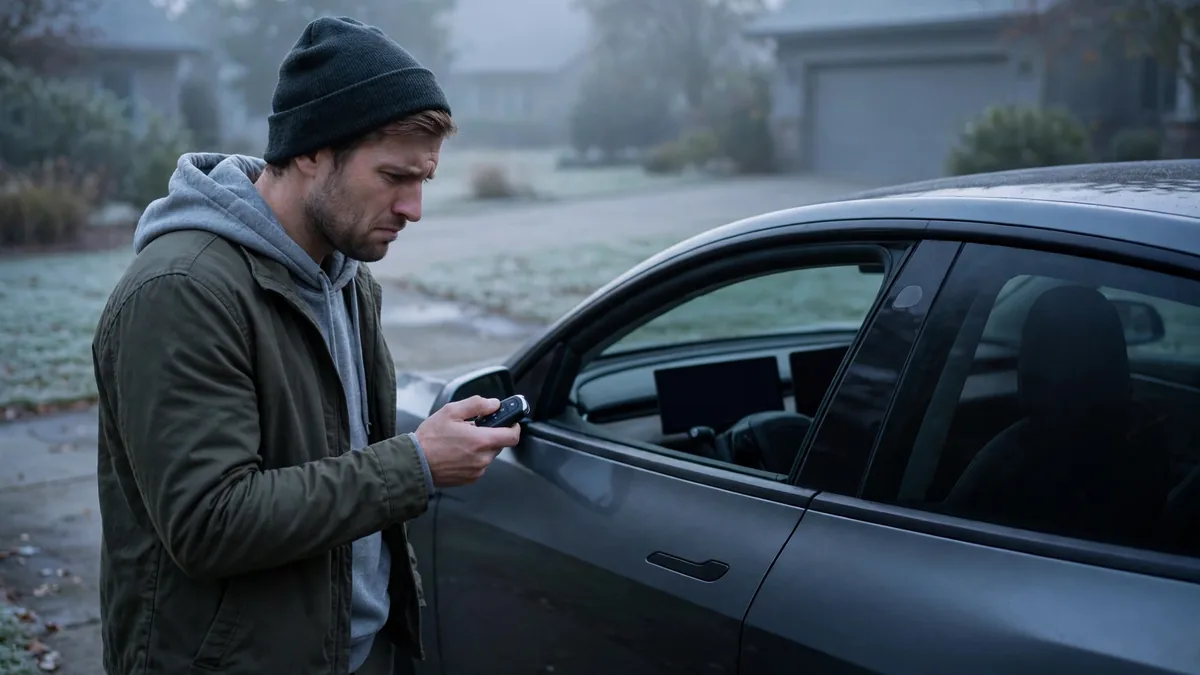
Your EV’s 12V auxiliary battery died, but you want to understand why it happened so it doesn’t happen again. This guide explains every reason a 12V battery fails in an EV, how to tell if yours is failing before it dies completely, and what to do about it.
This guide belongs to our EV won’t start or power on section. For the full overview, see What to Do If Your EV Won’t Power On.
In Short
The most common reason an EV’s 12V battery dies is age, most last 3–5 years before losing enough capacity to handle the car’s constant background drain. EVs draw more standby current than gas cars because of always-on systems like cellular connectivity, alarm, Bluetooth, and software processes. Not plugging in regularly, extreme temperatures, and software bugs that prevent deep sleep also accelerate 12V battery failure.
What Is the 12V Battery in an EV?
Every EV has a small 12V auxiliary battery, separate from the main high-voltage pack, that powers the car’s electronics. This includes the BMS computer, the dashboard displays, the door locks, headlights, horn, alarm system, the cellular modem that keeps the car connected to its app, and the contactors that connect the main battery to the drivetrain.
When the 12V battery dies, the car has no power for any of this, which is why the car goes completely dark and won’t respond to the key fob or app, even if the main battery is at 80%.
Why Does the 12V Battery Die in an EV?
1. Age: the most common cause
A 12V AGM battery has a typical lifespan of 3–5 years in an EV. Every charge/discharge cycle degrades the battery slightly. After enough cycles and years, the battery can no longer hold enough charge to sustain the car’s standby current overnight. Most 12V battery failures happen in cars between 3 and 6 years old.
2. Constant background current drain
Unlike a gas car that’s truly “off” when parked, most EVs keep multiple systems running in a low-power state: a cellular modem stays connected for app communication, the alarm system stays active, Bluetooth is ready for key fob detection, and the BMS performs periodic checks. This constant drain, even small, slowly depletes the 12V battery over days or weeks.
In gas cars, the alternator recharges the 12V battery every time the engine runs. In EVs, the DC-DC converter (which steps down high voltage to 12V) handles this, but only when the car is on or actively charging. When the car sits unplugged for days, the 12V battery slowly drains without any top-up.
3. High-drain features left active
Certain EV features dramatically increase standby current draw:
- Tesla Sentry Mode: Uses cameras and processing power 24/7. Can drain the 12V noticeably over days.
- Always-on cabin cameras (various brands)
- Amazon Alexa integration (Ford Lightning, some others), keeps the voice system active
- Continuous app connectivity, frequent app pings keep the cellular modem active more often
- Remote climate preconditioning left scheduled overnight
4. Not plugging in regularly
When an EV is plugged in, the DC-DC converter can run and keep the 12V battery topped up from the main pack. If the car sits unplugged for days or weeks, there’s no top-up happening, the 12V slowly drains. EV owners who regularly leave the car unplugged in a driveway or parking spot tend to experience 12V failures more frequently than those who plug in every night.
5. Software bugs preventing deep sleep
Many EVs are designed to enter a deep sleep mode after being parked for a period of time, reducing standby current to a minimum. Software bugs can prevent this sleep mode from activating properly, keeping systems running at full standby power for hours longer than they should. This has been documented on several Tesla software versions, Chevy Bolt versions, and Hyundai models. OTA updates have fixed these bugs for most models, keep your software current.
6. Temperature extremes
Cold temperatures reduce the capacity of any 12V lead-acid battery. A battery at 20°F can deliver only 50–60% of its rated capacity. If the 12V battery was already weakened by age, a cold night can push it over the edge into failure. This is why 12V battery failures spike in winter months.
7. DC-DC converter failure
The DC-DC converter is responsible for charging the 12V battery from the main pack whenever the car is on. If this converter fails or is underperforming, the 12V battery never gets properly topped up and drains over time. This is a less common cause but worth knowing, if a new 12V battery keeps dying, have the DC-DC converter tested.
Signs Your 12V Battery Is Failing Before It Dies
The 12V battery usually shows warning signs before it dies completely. Watch for these:
- App frequently loses connection to the car when parked
- Door locks or windows respond more slowly than usual
- Dashboard takes longer to appear at startup
- Headlights seem dimmer than before
- “12V Battery Low” warning in the app or dashboard
- Car needed a jump start once already
- Car is 4+ years old and has never had the 12V battery replaced
How to Check If Your 12V Battery Is Healthy
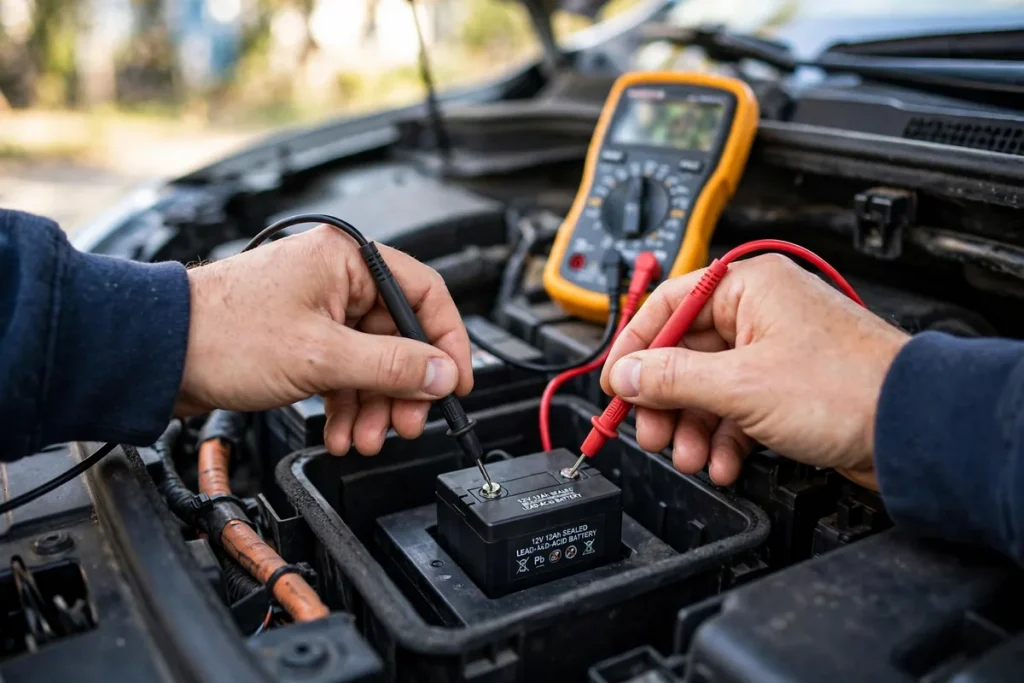
Use a multimeter to measure the voltage across the 12V terminals with the car off:
For a related problem, see Why Won’t My Electric Car Turn On?.
- 12.6–12.8V: Fully charged and healthy
- 12.4–12.6V: Adequately charged, monitor it
- 12.0–12.4V: Low, will struggle under load, replace soon
- Below 12.0V: Critically low, replace immediately
- Below 11.5V: Effectively dead, jump-start and replace today
How to Prevent 12V Battery Failure
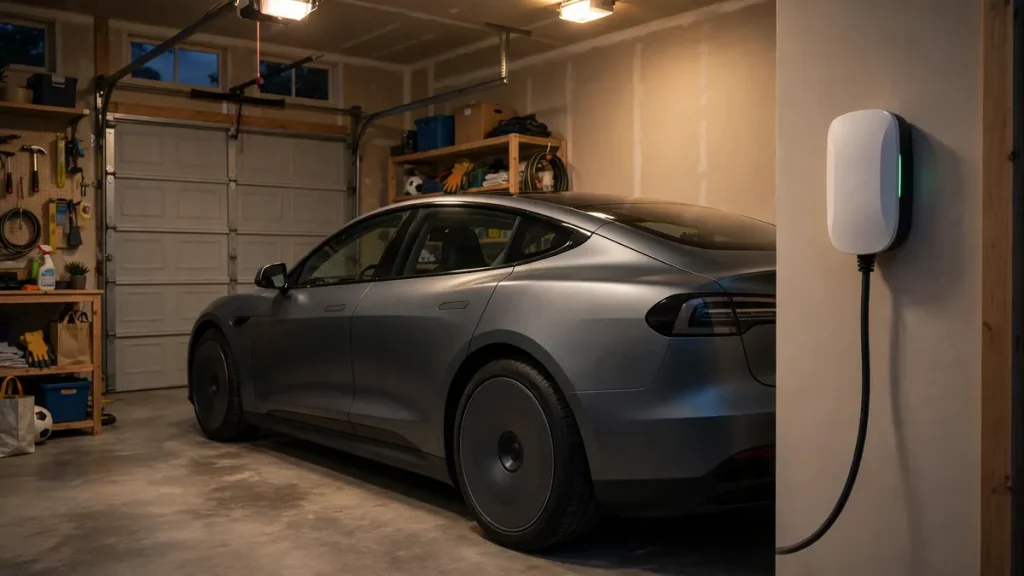
- Plug the car in every night, even if you don’t need to charge the main battery. This allows the DC-DC converter to maintain the 12V battery.
- Disable high-drain features (Sentry Mode, always-on camera) when parked at home
- Keep software updated, deep sleep bugs are frequently fixed in OTA updates
- Replace the 12V battery proactively at 3–4 years, before it fails
- If storing the car for more than a week unplugged, use a 12V trickle charger on the auxiliary battery
FAQs
How much does a replacement 12V battery cost for an EV?
The battery itself costs $80–$200 for standard AGM lead-acid versions. Newer EVs using a lithium 12V battery (some Teslas, some BMWs) cost $200–$400 for the battery. Labor adds $50–$150 at a dealer, but many owners replace the 12V battery themselves in 20–30 minutes using basic tools.
Is the 12V battery covered by the EV warranty?
The 12V auxiliary battery is typically covered under the basic vehicle warranty, usually 3 years or 36,000 miles. It is not covered under the longer high-voltage battery warranty (8 years/100,000 miles). If your car is under 3 years old and the 12V battery has failed, this should be a free warranty replacement.
Can a new 12V battery die quickly after replacement?
Yes, if the underlying cause hasn’t been addressed. If a software bug is preventing deep sleep, or if the DC-DC converter is failing to charge the 12V properly, a new battery will drain just as fast as the old one. If a new 12V battery dies within weeks of replacement, have the DC-DC converter tested and check for software updates that address sleep mode behavior.
Conclusion
EV 12V batteries die for the same reason any battery dies, age and overuse, but EVs are more demanding on the 12V system than gas cars because they never fully shut down. Always plugging in, disabling high-drain features, keeping software updated, and replacing the 12V battery proactively at 3–4 years will prevent the vast majority of 12V failures. If yours has already died, jump-start it, get the car to a shop, and replace it the same day.