Why Did My EV Range Drop Suddenly?

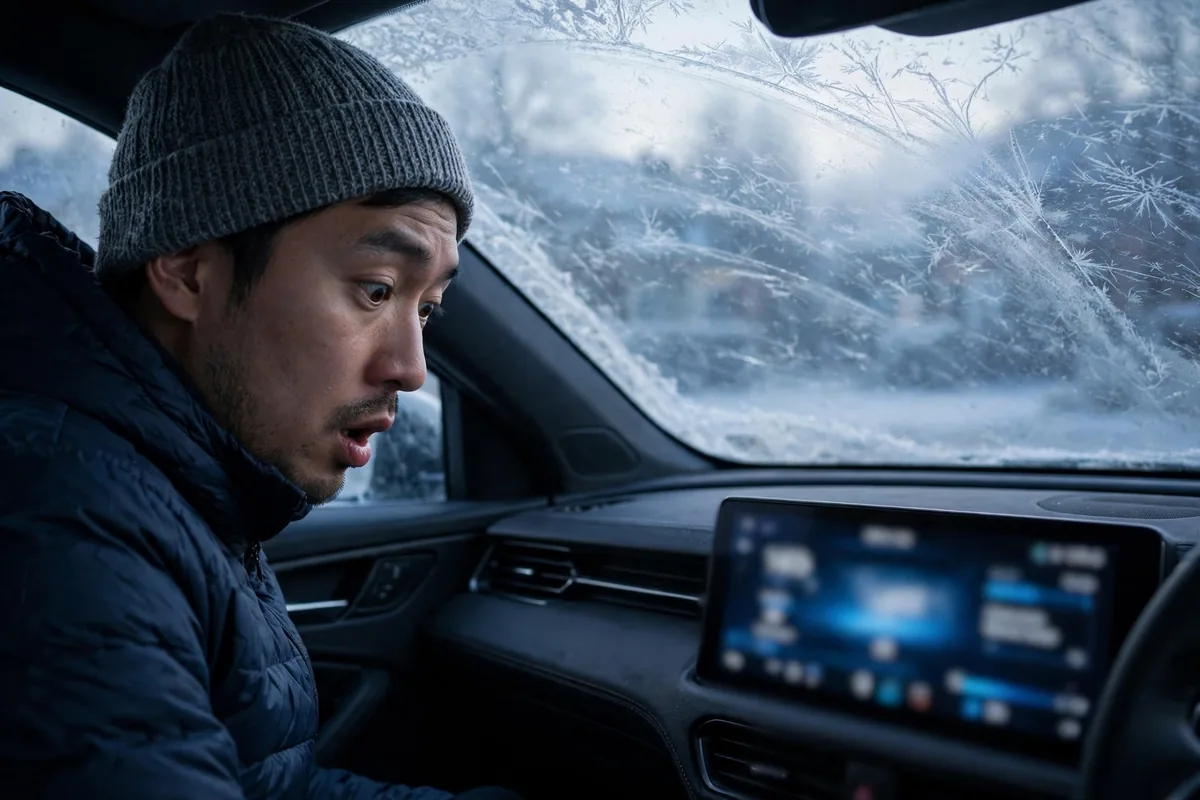
You drove your EV yesterday with no issues. Today the range estimate is 40, 60, or even 80 miles lower than it was. Nothing obvious changed. This guide covers every reason EV range drops suddenly, and tells you exactly which ones are serious and which ones fix themselves.
This guide belongs to our EV range problems section. For the full overview, see EV Range in Sport vs Eco Mode.
At a Glance
A sudden EV range drop is most commonly caused by a temperature change, a BMS that needs recalibration, a software update that changed how range is calculated, or the battery being charged to a different level than usual. True sudden hardware failure that causes overnight range loss is rare. Work through the environmental and software causes before assuming the battery is damaged.
What Causes a Sudden EV Range Drop?
| Cause | How Much Range Lost | Permanent? | Fix |
|---|---|---|---|
| Overnight temperature drop | 20–40% | No | Warms up when driving |
| OTA software update | 5–20% | No | Next update fixes it |
| BMS recalibration in progress | 10–20% (display only) | No | Full discharge/charge cycle |
| Charged to lower % than usual | Proportional | No | Charge to higher limit |
| Accessory use changed | 10–20% | No | Reduce heat, A/C, seat heaters |
| Cell group failure | 15–40% | Yes | Dealer inspection + warranty claim |
| Contactor fault | Varies | Yes | Dealer repair required |
How to Diagnose a Sudden Range Drop
Step 1: Check the temperature
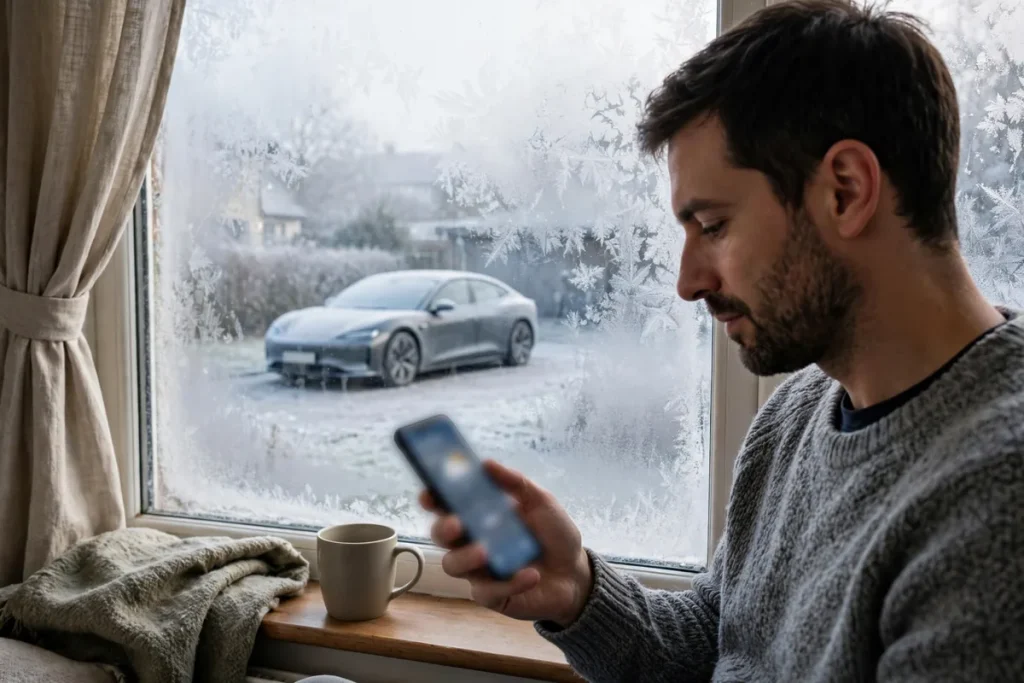
This is the single most common cause of overnight range drops. Lithium-ion cells lose usable capacity in cold temperatures, a drop from 60°F to 25°F overnight can reduce displayed range by 20–35% on most EVs. Check today’s temperature against yesterday’s. If it dropped noticeably, that’s almost certainly the cause. The range returns when the battery warms up during driving or when outdoor temperatures rise.
Heat also reduces range, but less dramatically. If temperatures climbed above 95°F overnight, the battery cooling system may have run heavily, consuming stored energy and reducing what was available in the morning.
Step 2: Check whether a software update ran overnight
Many EVs install OTA updates while parked overnight. An update that changes the BMS range calculation algorithm can make the car show a lower range estimate without any actual change in battery capacity. Check your car’s software update history, on Tesla it’s in Controls → Software, on other brands check Settings → About.
According to my experience, post-update range drops are one of the most commonly misdiagnosed battery problems. Search “[your car model] range drop [software version]” in owner forums before assuming hardware damage. If others report the same thing after the same update, a patch is usually coming.
Step 3: Check what charge percentage you’re comparing
If you usually charge to 90% and today the car only reached 70% before you noticed the range, that accounts for roughly 22% less range displayed, not a battery problem. Similarly, if the charge limit was accidentally changed or a scheduled charge ended early, the starting point for range calculation is simply lower.
Step 4: Try a BMS recalibration
The BMS can lose track of the battery’s true capacity over time, especially if you always charge between 20–80% and never do a full cycle. A BMS that’s lost calibration will display a range that’s lower than what the battery can actually deliver.
To recalibrate:
- Drive the battery down to 10–15%
- Charge all the way to 100%
- Let it sit at 100% for 1 hour before driving
- The BMS will update its estimate, range display should normalize within 1–2 drive cycles
Don’t do this more than once a month, repeated deep discharges add stress to the cells.
Step 5: Check actual energy consumption
Drive 20 miles and note how many miles of range were consumed. If the car used 20 miles of range to drive 20 miles, the range display is accurate and actual efficiency hasn’t changed. If it used 30+ miles of range to drive 20 miles, something is genuinely reducing efficiency, check tire pressure, inspect for brake drag, and check whether the climate system is running in an unusual mode.
Step 6: Use OBD2 to check battery SOH
If the range drop is consistent, doesn’t resolve after a recalibration cycle, and can’t be explained by weather or software, read the battery’s state of health (SOH) with an OBD2 scanner. A healthy battery in a car under 5 years old should show 85%+ SOH. A sudden drop to below 75% on a relatively new car indicates a cell group has failed and needs a dealer inspection.
How to Fix It: Step by Step
Fix 1: Temperature-related drop
- Precondition the battery before driving using your car’s app, do this while still plugged in so it uses grid power, not battery power
- Park in a heated garage when temperatures drop below freezing
- Use seat heaters instead of full cabin heat, they use far less energy
- Allow 10–15 minutes of driving for the battery to warm up before judging actual range
Fix 2: Software-related drop
- Check your manufacturer’s owner forum for reports of range changes after your specific software version
- If a fix is known, wait for the next OTA update
- Contact manufacturer support if the drop is severe and no fix is announced, reference your software version and the date the drop occurred
Fix 3: BMS calibration drop
- Perform one full discharge and full charge cycle as described above
- If range normalizes after this cycle, the BMS just needed recalibration, no hardware issue
Fix 4: Real capacity loss (hardware)
- Get a full battery health inspection at an authorized dealer
- Request a written report showing SOH and individual cell voltages
- If SOH is below the manufacturer’s warranty threshold, file a warranty claim immediately
- Manufacturer 8-year/100,000-mile battery warranty covers capacity loss below the manufacturer’s stated minimum
Brand-Specific Notes
- Tesla Model 3/Y: Multiple firmware updates have changed range calculations. Check Tesla forums for your exact software version before assuming hardware loss.
- Nissan Leaf: The Leaf has no active thermal management, range drops in both cold and hot weather are more severe than other brands. Capacity bars dropping from 12 to 11 or fewer indicate real degradation.
- Chevy Bolt: Post-recall software limits charging to 80% or 90% by default, if your Bolt’s range dropped after a dealer visit, check whether the charge limit was changed as part of a recall update.
- Hyundai Ioniq 5 / Kia EV6: These cars are known to show lower range estimates in cold weather than they actually deliver. Drive 10–15 minutes and the estimate typically corrects upward.
- Ford Mustang Mach-E: Some owners reported range estimate drops after specific OTA updates. Ford has addressed several of these through subsequent updates.
- Rivian R1T/R1S: Rivian pushes frequent OTA updates that affect range estimates. Check the Rivian app’s software release notes after any overnight update.
- VW ID.4: Cold weather range loss on the ID.4 is more pronounced than EPA estimates suggest. This is a known characteristic, not a defect.
When to Contact a Dealer
Contact a dealer if the range drop is more than 25% and doesn’t recover in mild weather, the drop happened on a warm day with no software update, the OBD2 SOH reading is well below expected for the car’s age and mileage, the battery percentage jumps erratically alongside the range loss, or multiple warning lights appeared at the same time as the range drop. These combinations point to a hardware issue requiring professional diagnosis.
For a related problem, see Why Is My EV Range Lower Than Expected?.
Repair Cost
| Repair | Cost | Covered by Warranty? |
|---|---|---|
| Battery diagnostic scan | $100–$200 | Free if under warranty |
| BMS software update/reflash | $100–$300 | Often free |
| Battery module replacement | $2,000–$8,000 | Yes, if within 8yr/100k |
| Full battery pack replacement | $8,000–$20,000+ | Yes, if within 8yr/100k |
Can You Continue Driving?
Yes, a sudden range drop is not a safety issue in the vast majority of cases. Plan trips conservatively around the lower range until the cause is identified. If range dropped so severely that you can’t complete normal daily trips, charge more frequently and get the battery inspected. Don’t ignore a range drop that comes with warning lights, that combination warrants immediate dealer attention.
How to Prevent Sudden Range Drops
- Keep software up to date so BMS calibration algorithms stay current
- Do a full discharge/charge cycle once every 2–3 months to keep the BMS calibrated
- Keep the battery between 20–80% for daily use to reduce degradation
- Always plug in overnight, the thermal management system runs more efficiently when plugged in
- Track your range over time in a simple note or spreadsheet so you can identify real trends vs. temporary drops
FAQs
My range dropped 50 miles overnight: is my battery failing?
Not necessarily. A 50-mile drop is large, but if temperatures dropped noticeably overnight, that alone can account for it on many EVs. Check the temperature first. If it was mild overnight and no update ran, then a 50-mile drop warrants an OBD2 scan and dealer inspection.
Can a single fast-charging session cause range loss?
One fast-charging session won’t cause measurable permanent range loss on a modern EV with good thermal management. However, fast charging in very hot weather without preconditioning does cause more cell stress than normal. The range loss from a single session, if any, is in the noise, not something you’d notice on the range display.
How do I know if my range drop is real or just a display error?
Drive a known distance, say 20 miles, and check how much range was consumed. If range consumed matches miles driven closely, it’s a display recalibration issue. If the car consistently uses more range than miles driven across multiple trips, the efficiency loss is real and warrants investigation.
Conclusion
Most sudden EV range drops are caused by temperature changes, software updates, or a BMS that needs recalibration, not hardware failure. Work through the environmental and software causes first before spending money on a dealer inspection. A single full discharge/charge cycle fixes most calibration issues. For drops over 25% that don’t respond to any of these fixes, get an OBD2 SOH reading and schedule a dealer battery inspection, you may have a warranty claim waiting.