What Is an EV Battery Deep Discharge and Can It Be Fixed

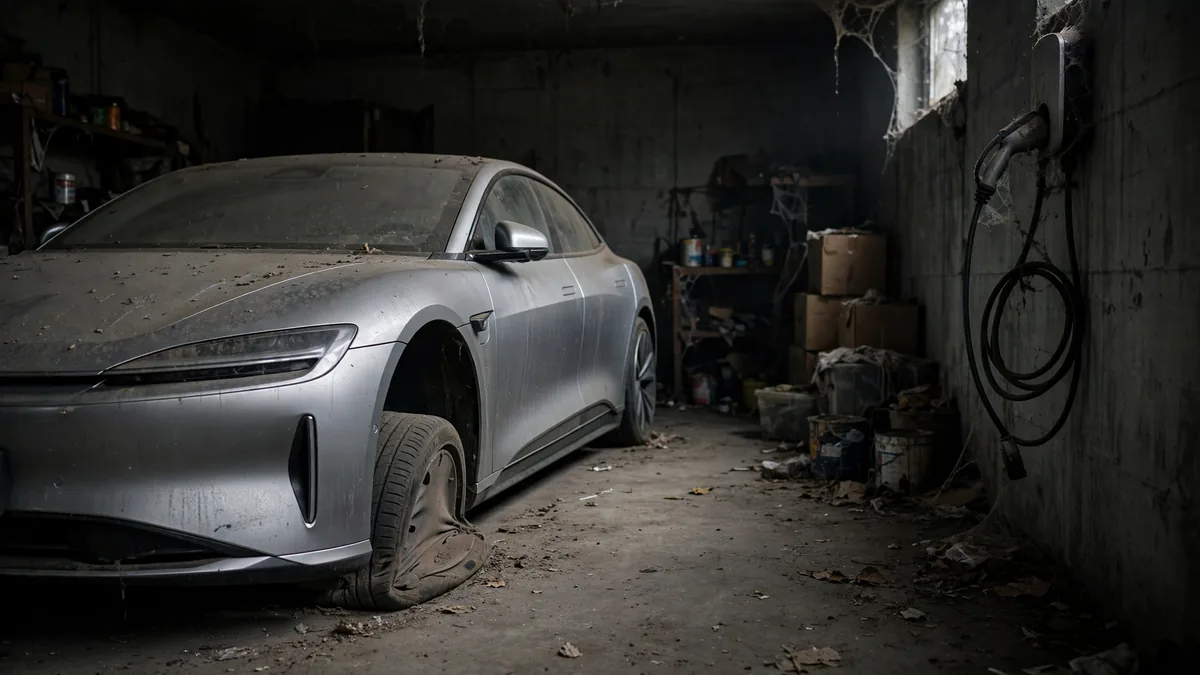
Deep discharge is one of the most damaging events an EV battery can experience, but it’s also one of the most misunderstood. Many owners don’t know exactly where the line is between a normal low-charge event and a true deep discharge, or whether the damage from a deep discharge is permanent. This guide explains the chemistry, the damage thresholds, and what can actually be done after a deep discharge event.
This guide belongs to our battery health section. For the full overview, see Why an EV Battery SOH Reading Can Be Incorrect.
The Short Answer
A deep discharge occurs when a lithium battery cell is discharged below its minimum safe voltage, typically below 2.5–3.0V per cell, depending on chemistry. In a modern EV, the BMS prevents true deep discharge by cutting off drive power before cells reach this threshold, leaving a protected buffer. If the battery continues to self-discharge through this buffer while parked over days or weeks, the cells can enter genuine deep discharge territory. Some recovery is possible with slow recharging, but permanent capacity loss from deep discharge cannot be reversed.
What “Deep Discharge” Means for Lithium Cells
A fully charged NMC or LFP lithium cell sits at approximately 4.1–4.2V. A nominally empty cell (the bottom of the usable range) sits at approximately 3.0–3.2V. A deeply discharged cell has dropped below this minimum, into a voltage range where chemical reactions damage the cell structure:
- Below 3.0V (NMC): Copper current collector begins to dissolve into the electrolyte, this is irreversible and introduces metallic contaminants into the cell
- Below 2.5V: Significant SEI layer breakdown, lithium plating in reverse, and electrolyte decomposition accelerate, causing both capacity loss and increased internal resistance
- Below 2.0V: Permanent structural damage to the cathode, capacity loss from this level is significant and cannot be recovered
- Near 0V or polarity reversal: The cell may reverse polarity (anode becomes cathode temporarily), this is catastrophic and the cell must be considered failed
How the EV BMS Prevents Deep Discharge
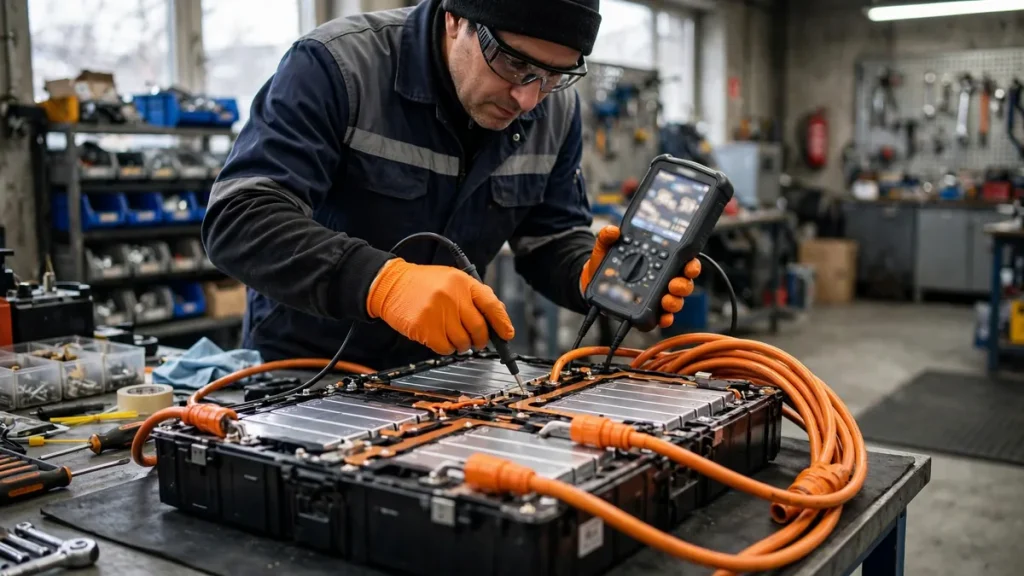
The BMS maintains a protective buffer between the displayed “0%” SOC and the actual cell minimum voltage. When the car displays 0% and shuts down, the cells are still above their absolute minimum, typically at 3.0–3.2V. The BMS hides approximately 5–10% of physical capacity as an inaccessible reserve to ensure cells never reach damaging voltages during normal operation.
This protection works as long as the BMS itself has power to monitor and control the cells. The vulnerability: when the 12V system completely depletes (from extended parking without recharging), the BMS may lose power and no longer be able to enforce the protection cutoff, allowing self-discharge to continue into genuinely damaging voltage territory.
The Timeline of a Deep Discharge Event
| State | Cell Voltage | Damage Level | BMS Status |
|---|---|---|---|
| Normal low battery (10% displayed) | 3.2–3.5V | None | Active protection |
| BMS shutdown point (“0%” displayed) | 3.0–3.2V | None, within design | Active protection |
| 1–3 days at 0% (self-discharge) | 2.8–3.0V | Mild, reversible SEI effects | Active if 12V battery OK |
| 1–2 weeks at 0% (extended) | 2.5–2.8V | Moderate, permanent 3–8% loss | Marginal, 12V may be low |
| 3–4+ weeks at 0% | 2.0–2.5V | Severe, 10–20%+ permanent loss | Likely unavailable, 12V depleted |
| Months at 0% (extreme) | Below 2.0V | Catastrophic, cell replacement | Not available |
Can a Deep Discharge Be Fixed?
What can be recovered:
- BMS calibration drift: Fully recoverable, the BMS recalibrates through cycling
- Mild SEI layer effects: Partially recoverable, several charge cycles allow some SEI reformation
- Temporary electrolyte ion redistribution: Recoverable, normalizes with cycling
- BMS protection re-engagement: Fully recoverable once 12V battery is charged
What cannot be recovered:
- Copper current collector dissolution: Irreversible, metallic contaminants remain in the electrolyte permanently
- Cathode structural damage from sub-2.5V discharge: Permanent capacity reduction
- Cell polarity reversal damage: Permanent, cell must be replaced
- Lithium plating (dendrites) from sub-2.0V: Creates ongoing short-circuit risk, permanent and dangerous
The practical answer: prompt deep discharge recovery (connecting to charge within 24–72 hours of reaching 0%) typically results in 1–5% permanent capacity loss. Extended deep discharge (weeks or months below 2.5V) results in 10–30%+ permanent capacity loss that cannot be reversed through any charging or reconditioning process.
For a related problem, see What Does EV Battery Reconditioning Do and When Is It Needed.
Recovery Process After a Deep Discharge
Step 1: Connect to Level 1 or Level 2: not DC fast charge
Severely depleted lithium cells must be charged slowly to allow safe chemical recovery. DC fast charging high current into deeply depleted cells exacerbates lithium plating and cathode stress. Level 1 (120V/12A) provides a safe recovery rate, the BMS’s recovery mode typically limits initial charging current to an even lower rate until cells return to the safe voltage range.
Step 2: Allow the BMS recovery protocol to run
Modern EVs enter a “recovery charge” mode when the BMS detects cells below the normal operating range. During recovery mode, the charger delivers very low current (sometimes as low as 0.1C) until all cells return to above the minimum operating voltage. This process takes 1–4 hours before normal charging resumes. Don’t interrupt this process, leaving the car connected to the charger undisturbed gives the recovery protocol the best chance of completing successfully.
Step 3: Charge to 100% and run recalibration cycles
After the initial recovery charge, charge fully to 100% and hold for 1 hour. Then run 2–3 complete recalibration cycles (100% → 15% → 100% hold) over the following week. These cycles give the BMS fresh data to accurately model the post-deep-discharge battery capacity and produce reliable SOH and range estimates going forward.
Step 4: OBD2 scan for fault codes
After recovery, connect an OBD2 scanner and read all stored codes. Undervoltage fault codes from the deep discharge event tell you which cell groups were most severely affected. If specific cell group fault codes persist after 3 charge cycles, those groups experienced more severe deep discharge damage and may need dealer evaluation.
When Recovery Is Not Possible
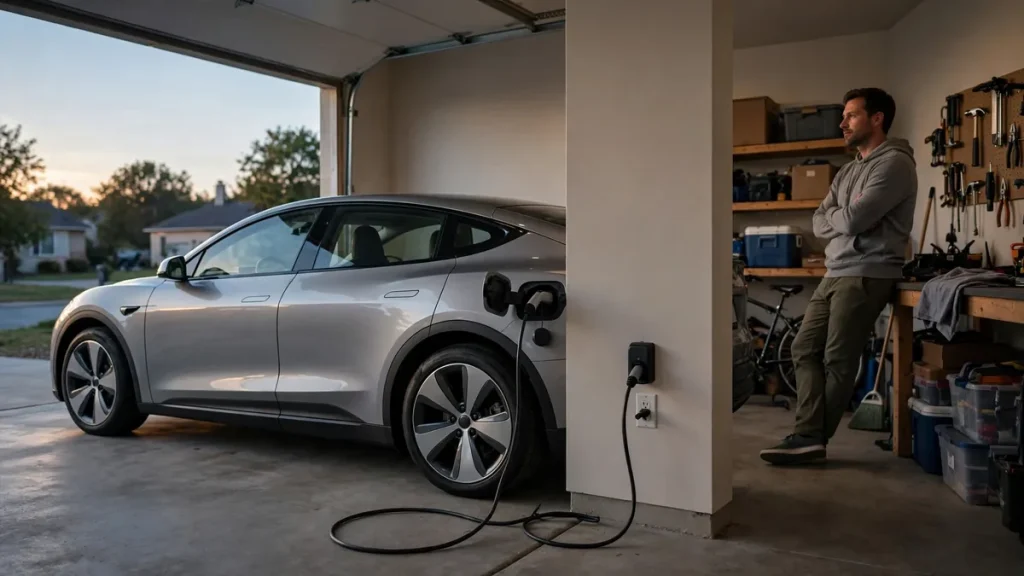
If the battery sat depleted for months and cells reached very low voltages, the BMS may not be able to initiate normal charging because the cells are below the minimum voltage at which the charger can safely operate. Signs of this:
- Charger connects but shows “error” or “fault” immediately
- Car shows no response at all, no lights, no display, even after hours on Level 1
- EVSE shows very low or zero energy delivery despite being connected
In this situation, the dealer may be able to perform a “battery wake” procedure using OEM diagnostic equipment that applies a controlled trickle charge to bring cells back above the BMS’s minimum operating threshold. This is not guaranteed to succeed for severely depleted batteries.
FAQs
Is deep discharge from running to 0% the same as parking and forgetting the car for months?
No, running to 0% while driving triggers the BMS shutdown at the protected minimum voltage (cells at 3.0–3.2V), which is not in the damaging range. Parking and forgetting the car allows vampire drain to continue past this shutdown point over days and weeks. The second scenario is genuinely more damaging than the first because the BMS’s voltage floor protection only works when the car is actively managing power, parked self-discharge bypasses this protection gradually.
My EV won’t charge at all after sitting for 3 months: is it destroyed?
Not necessarily destroyed, but it may require dealer intervention. After 3 months of self-discharge, the 12V battery is almost certainly depleted (preventing the BMS from communicating with the charger), and the HV cells may be below the charger’s minimum input threshold. Try connecting to Level 1 for 4–6 hours without attempting to start the car. If there’s still no response, contact the dealer for a battery recovery procedure, OEM tools can sometimes revive batteries that aftermarket tools cannot.
Conclusion
EV battery deep discharge is a real event distinct from simply running the battery low, it occurs when cells drop below their minimum safe voltage, typically from extended parking without recharging. The BMS prevents most deep discharge during normal operation, but its protection fails if the 12V battery depletes during extended storage. Recovery is possible for mild events (24–72 hours) with 1–5% permanent loss. Severe events (weeks or months) cause 10–30%+ permanent capacity loss that no charging or reconditioning process can reverse. Connect to Level 1 immediately for recovery, use the BMS’s slow recovery protocol, and get an OBD2 scan for fault codes after recovery to assess the actual damage.