EV Battery Swelling: Causes, Signs and What to Do

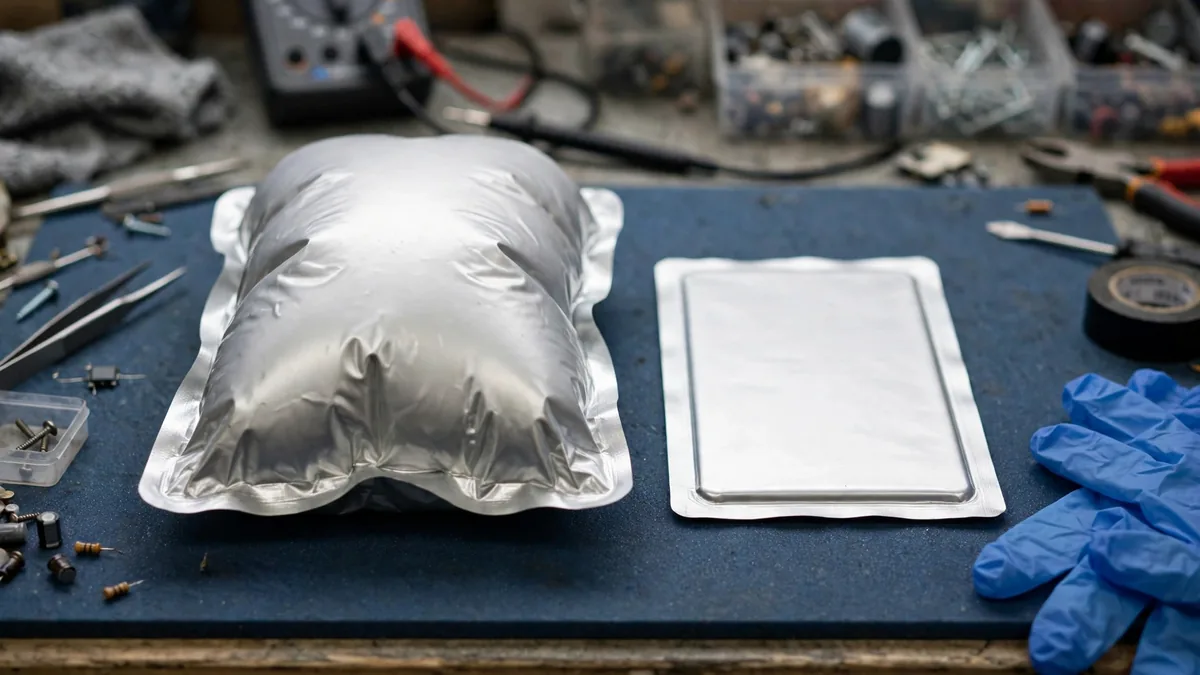
EV battery swelling is one of the more alarming battery conditions, and for good reason. A swollen lithium battery is a safety issue that requires immediate attention. This guide explains what causes EV battery swelling, how to recognize it, and what to do if you suspect your battery pack is swelling.
This guide belongs to our battery health section. For the full overview, see Why an EV Battery SOH Reading Can Be Incorrect.
Quick Answer
EV battery swelling is caused by gas buildup inside individual cells from electrolyte decomposition, a process accelerated by overcharging, overheating, or physical damage to cell internal structures. In an EV, true pouch cell swelling is contained within the battery pack structure and is rarely visible from outside the vehicle. Detectable signs include battery fault codes specifically for cell pressure or isolation warnings, unusual heat from the battery area, and in rare severe cases, visible deformation of the battery pack housing. ⚠️ If you suspect your EV battery is swelling, stop charging and contact your dealer immediately.
What Causes EV Battery Swelling
Lithium-ion cells produce gas when the electrolyte undergoes decomposition reactions. This gas production occurs through several mechanisms:
Cause 1: Overcharging
When a lithium cell is charged above its maximum voltage (4.2V per cell for most NMC chemistry), the cathode material undergoes oxidative decomposition that releases oxygen gas. Simultaneously, the electrolyte is oxidized, producing CO2 and other gases. The BMS prevents overcharging in normal operation, but a BMS fault or failure of the cell monitoring circuit can allow cells to exceed their maximum voltage.
Cause 2: Thermal runaway or severe overheating
When a cell or module reaches extreme temperatures (above 80–100°C), thermal decomposition of the electrolyte and separator material generates large amounts of gas rapidly. This is the precursor to thermal runaway, the gas generation and heat create a self-reinforcing cycle. This is the most dangerous form of battery swelling and the reason EVs have multiple temperature protection layers.
Cause 3: Physical damage to cell internal structure
A dendrite (crystalline lithium growth from lithium plating) that penetrates the separator between the anode and cathode creates an internal short circuit. The resulting localized heat decomposition gas. This can occur from severe cold-charging events that weren’t prevented by preconditioning.
Cause 4: Advanced age with cumulative electrolyte decomposition
Over thousands of cycles, normal but gradual electrolyte decomposition produces small amounts of gas. In cylindrical cells (used by Tesla), this gas is managed through a built-in pressure vent. In pouch cells (used by many other EV manufacturers), gas accumulation can cause the pouch to expand, this is the most common form of swelling visible in post-collision inspection or teardown situations. The BMS monitors for pressure abnormalities through isolation resistance changes.
Is EV Battery Swelling Visible to the Owner?
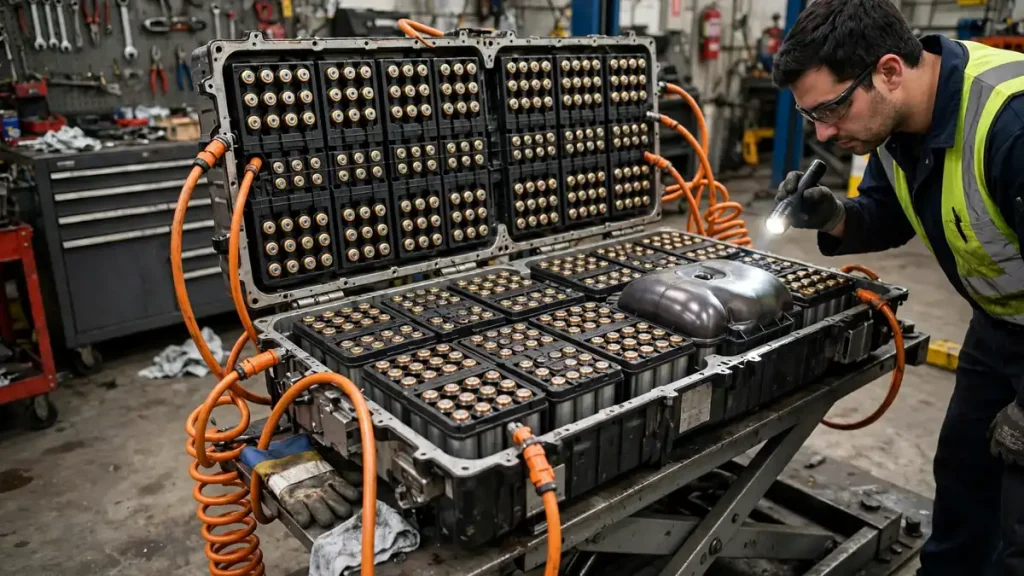
Rarely, EV battery packs are sealed metal enclosures mounted under the floor. Even significant pouch cell swelling inside the pack is invisible from outside the vehicle. Swelling becomes visible only in extreme cases: after a collision that deforms the pack housing, after a severe thermal runaway event, or during battery pack disassembly.
Unlike a phone battery swelling (which lifts the back cover), EV battery swelling is contained within the structural pack housing. The signs an owner detects are indirect: unusual smells, fault codes, or thermal events, not visible deformation of the car’s exterior.
Signs That May Indicate Battery Swelling in an EV
Sign 1: Isolation fault code (P0AA6)
As cells swell and the electrolyte contacts areas it shouldn’t, isolation resistance between the HV system and the chassis decreases. The BMS monitors isolation resistance continuously, a sudden drop in isolation resistance is one of the earliest electrical signs of cell swelling or electrolyte leakage. P0AA6 (or equivalent manufacturer-specific code) appearing without obvious physical cause warrants battery inspection.
Sign 2: Unusual burning or chemical smell from the battery area
Lithium electrolyte has a distinctive sweet, chemical smell. If electrolyte gas is venting from a swelling cell (through the pack’s pressure relief), you may detect this smell near the battery area (typically the car’s underside). Any unusual chemical smell from under the vehicle warrants immediate attention, don’t dismiss it as a normal car smell.
Sign 3: Battery area unusually hot after normal operation
Localized heat from a swelling or shorting cell generates above-normal heat in the battery compartment. If you feel heat radiating from the battery area (floor of the car) noticeably more than normal after a drive or charge session, a cell generating abnormal internal heat is possible.
Sign 4: Spontaneous BMS alerts without driving or charging
A battery condition warning that appears while the car is parked and not charging, particularly with isolation codes, can indicate a developing cell condition including incipient swelling or internal shorting. These alerts while parked without any obvious trigger warrant immediate investigation.
What to Do If You Suspect EV Battery Swelling
⚠️ Battery swelling indicates a potentially dangerous condition. Follow these steps:
For a related problem, see What Does EV Battery Reconditioning Do and When Is It Needed.
- Stop charging immediately, unplug the car if it’s connected
- Park outdoors away from structures, not in a garage, not adjacent to buildings
- Do not continue driving
- Do not attempt to open the battery pack
- Contact your dealer or roadside assistance immediately
- If a smell or smoke is present: evacuate the area and call 911, lithium battery fires are classified as Class D fires and require specialized extinguishing material
Is EV Battery Swelling Covered Under Warranty?
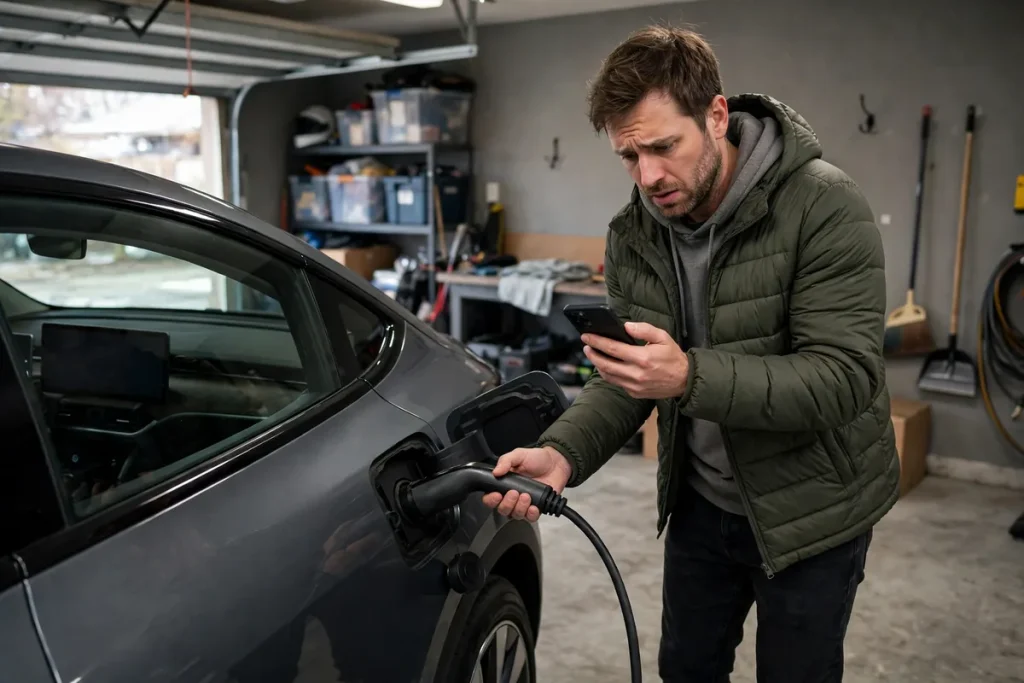
Battery swelling from a manufacturing defect or BMS failure is covered under the 8-year/100,000-mile battery warranty. Swelling from external causes (collision damage, unauthorized modification, willful overcharging by bypassing BMS protection) may not be covered. Document any symptoms, the timeline, and your charging and driving history before contacting the dealer, this documentation supports the warranty claim and helps the dealer’s investigation.
FAQs
How common is EV battery swelling?
Significant battery swelling serious enough to cause safety concerns is uncommon in modern EVs, BMS protection against overcharging and overheating is multi-layered and effective. The most commonly reported cases involve vehicles that experienced severe physical damage, charging system malfunctions, or in rare cases, manufacturing defects in specific cell batches (as in the Chevy Bolt recall). Normal EV ownership carries very low risk of encountering this condition.
Can a swollen EV battery be repaired, or does it need full replacement?
Swollen cells cannot be returned to normal, the gas production from decomposition is irreversible, and a swollen pouch cell cannot be safely deflated and reused. The affected module must be replaced. Depending on the extent of swelling and whether it’s isolated to one module, partial or full pack replacement may be required. The dealer’s inspection determines the scope.
Conclusion
EV battery swelling is caused by gas buildup from electrolyte decomposition, triggered by overcharging, severe overheating, physical damage, or advanced age. Unlike phone battery swelling, EV battery swelling isn’t visible from outside the car, the first detectable signs are isolation fault codes, unusual smells, and unexpected battery heat. If you detect any of these, stop charging, park outdoors away from structures, and contact your dealer immediately. Battery swelling from manufacturing defects or BMS failure is covered under the 8-year warranty. Don’t attempt to inspect or open the battery pack yourself.