How to Report an EV Battery Problem to the NHTSA

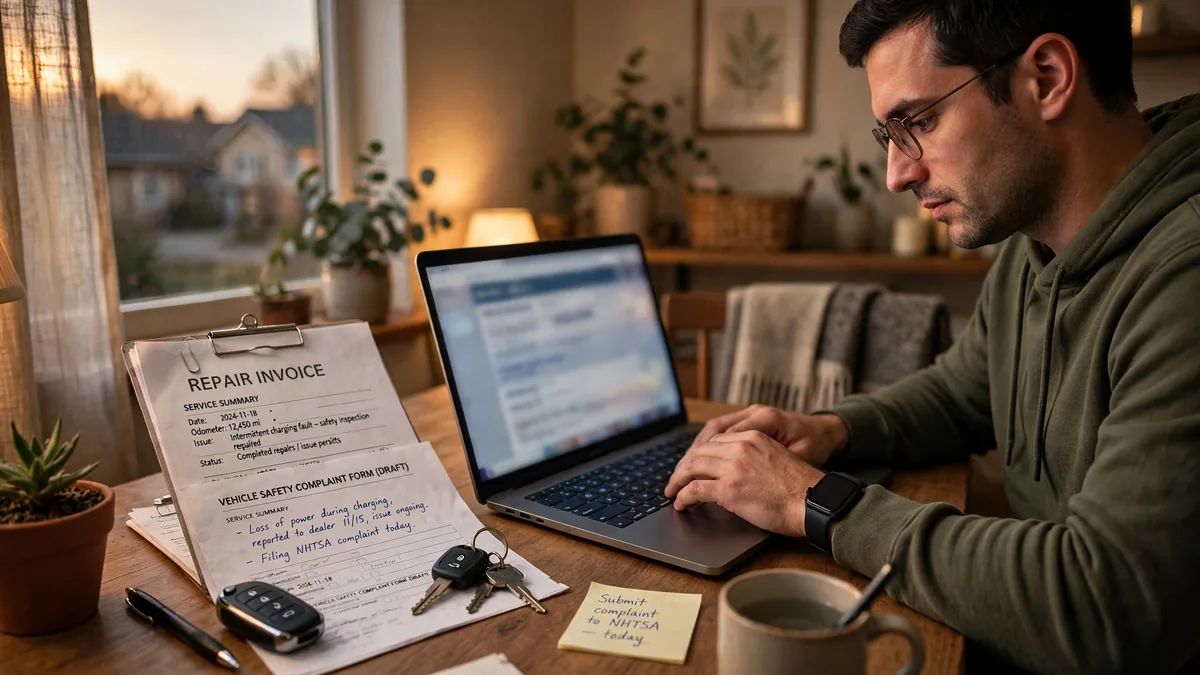
Your EV battery has a problem and you need to report it to the National Highway Traffic Safety Administration (NHTSA). This guide explains why filing an NHTSA complaint matters, how to do it correctly, and what happens after you submit.
This guide belongs to our general guides section. For the full overview, see Common EV Battery Problems and How to Fix Them.
Quick Answer
File an NHTSA complaint at nhtsa.gov/report-a-safety-problem. You’ll need your VIN, a description of the battery problem, and the dates it occurred. Filing is free, takes about 10 minutes, and creates a permanent federal record. When enough owners report the same problem, the NHTSA can open a formal investigation and require a recall, even if the manufacturer has been unresponsive.
Why File an NHTSA Complaint?
The NHTSA complaint database does three important things:
- Creates a federal record. Your complaint is stored permanently and is visible to NHTSA investigators, journalists, attorneys, and other consumers. Manufacturers know their complaints are monitored.
- Contributes to recall investigations. When the NHTSA sees a pattern of similar complaints from different owners, they can open a Preliminary Evaluation, the first step toward a mandatory recall. The Chevy Bolt battery recall and multiple other EV recalls were triggered in part by NHTSA complaint trends.
- Signals the manufacturer. Automakers closely track NHTSA complaint volumes. A spike in battery-related complaints for a specific model year usually prompts internal engineering review, even before a formal investigation opens.
When to File an NHTSA Complaint
You should file if:
- Your EV battery caused a safety incident, unexpected shutdown while driving, fire, smoke, sparking, or flooding damage that wasn’t handled safely
- You believe a defect in the battery contributed to an accident or near-accident
- The manufacturer has denied a warranty claim you believe is valid
- Multiple dealer visits haven’t resolved a recurring battery problem
- You want to add your experience to the public record to help other owners
You can file even if the problem was eventually fixed, the complaint still adds to the pattern data that NHTSA investigators use.
How to File Step by Step
Step 1: Go to the NHTSA complaint portal
Go to nhtsa.gov/report-a-safety-problem and click “File a Vehicle Safety Complaint.” You can also call the NHTSA’s vehicle safety hotline at 1-888-327-4236 (TTY: 1-800-424-9153) to file by phone.
Step 2: Enter your vehicle information
You’ll need:
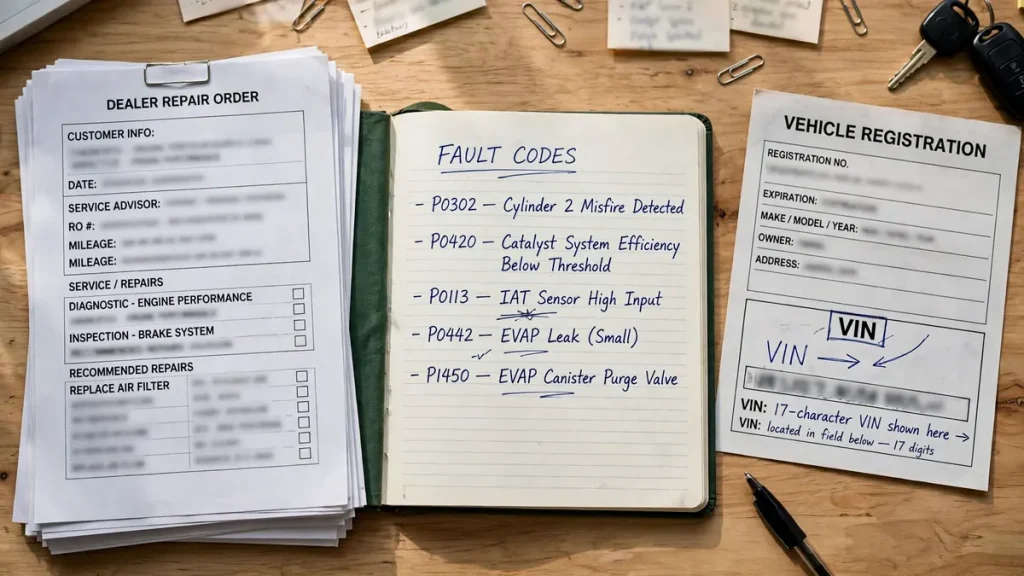
- Your Vehicle Identification Number (VIN), found on the dashboard near the windshield, driver’s door jamb, or your registration
- Model year, make, and model
- Current mileage
Step 3: Select the component
For battery problems, select “Electrical System” or “Power Train” from the component list, then narrow down to the most specific subcategory available. For charging-related issues, “Electrical System: Battery” is usually the right choice. For issues that caused the car to shut off while driving, “Power Train” may be more appropriate.
Step 4: Describe the problem
This is the most important part. Be specific, factual, and clear. Include:
- What happened (warning light, shutdown, charging failure, fire, etc.)
- When it first happened and how many times it has recurred
- The fault codes if you have them
- What the dealer found (or didn’t find)
- Whether anyone was injured or if an accident occurred
- What the manufacturer has done about it (or hasn’t done)
Write clearly and avoid overly emotional language. NHTSA investigators are looking for factual patterns, specific technical details carry more weight than frustrated narratives.
Step 5: Attach supporting files
You can attach photos, videos, and documents to your NHTSA complaint. Attach:
- Photos of warning lights or dashboard messages
- Photos of physical damage (charging port, battery area)
- Dealer repair orders
- OBD2 fault code screenshots
Step 6: Submit and save your complaint ID
After submitting, you’ll receive a complaint number. Save this number, you can use it to check the status of your complaint online, and reference it in any communications with the manufacturer or your attorney.

What Happens After You File
After filing:
For a related problem, see How Much Does EV Battery Diagnosis Cost?.
- Your complaint is added to the public database, visible at nhtsa.gov/vehicle-safety/complaints
- NHTSA analysts review complaint trends for patterns that may indicate a safety defect
- If enough similar complaints are filed, the NHTSA may open a Preliminary Evaluation, then an Engineering Analysis, then a potential recall
- Manufacturers are notified of complaints filed against their vehicles
- You may be contacted by NHTSA if they’re actively investigating a defect related to your complaint
Filing a complaint doesn’t guarantee action on your individual case. The NHTSA focuses on safety patterns, not individual warranty disputes. But your complaint contributes to the evidence that shapes those patterns.
How to Check for Existing NHTSA Complaints on Your Vehicle
Before or after filing, check how many similar complaints have already been filed for your vehicle:
- Go to nhtsa.gov/vehicle-safety/complaints
- Enter your VIN or select your year/make/model
- Filter by “Electrical System” or “Battery”
- Review existing complaints, this tells you whether others are experiencing the same problem and whether the NHTSA is already investigating
If you find dozens of similar complaints for your model, include that in your communication with the manufacturer: “As of [date], the NHTSA database shows [X] complaints matching my exact symptom on the [year/model].”
Also Check for Open Recalls
Before filing a complaint, check whether your vehicle already has an open recall that covers your battery issue. Search your VIN at nhtsa.gov/recalls. If there’s an active recall, the manufacturer is already obligated to fix the problem for free, filing a complaint is still useful but contacting the dealer about the recall is the faster path to resolution.
FAQs
Will the manufacturer know I filed an NHTSA complaint?
Yes. Manufacturers monitor the NHTSA database and are formally notified of complaints filed against their vehicles. This is one reason NHTSA complaints sometimes accelerate manufacturer response, they know you’ve engaged a federal safety agency.
Is my personal information public when I file an NHTSA complaint?
The NHTSA publishes complaint data publicly, but your name, address, and contact details are redacted from the public record. The publicly visible information is the vehicle description, mileage, and your description of the problem.
Can I file an NHTSA complaint and a manufacturer complaint at the same time?
Yes, and you should. Filing both simultaneously gives you a federal record and a direct channel to the manufacturer at the same time. Reference your NHTSA complaint number in your manufacturer complaint letter: “I have also filed an NHTSA safety complaint (complaint #XXXXX) regarding this issue.”
Conclusion
Filing an NHTSA complaint about your EV battery takes 10 minutes and costs nothing. It creates a permanent federal record, contributes to safety investigations that can trigger recalls, and puts manufacturers on notice that a federal agency is aware of the problem. File it at nhtsa.gov/report-a-safety-problem with specific fault codes, dates, and dealer repair order numbers. Even if it doesn’t solve your individual problem immediately, it may protect the next owner of the same model from experiencing the same issue.