Chevy Bolt Battery Problems: What Owners Report

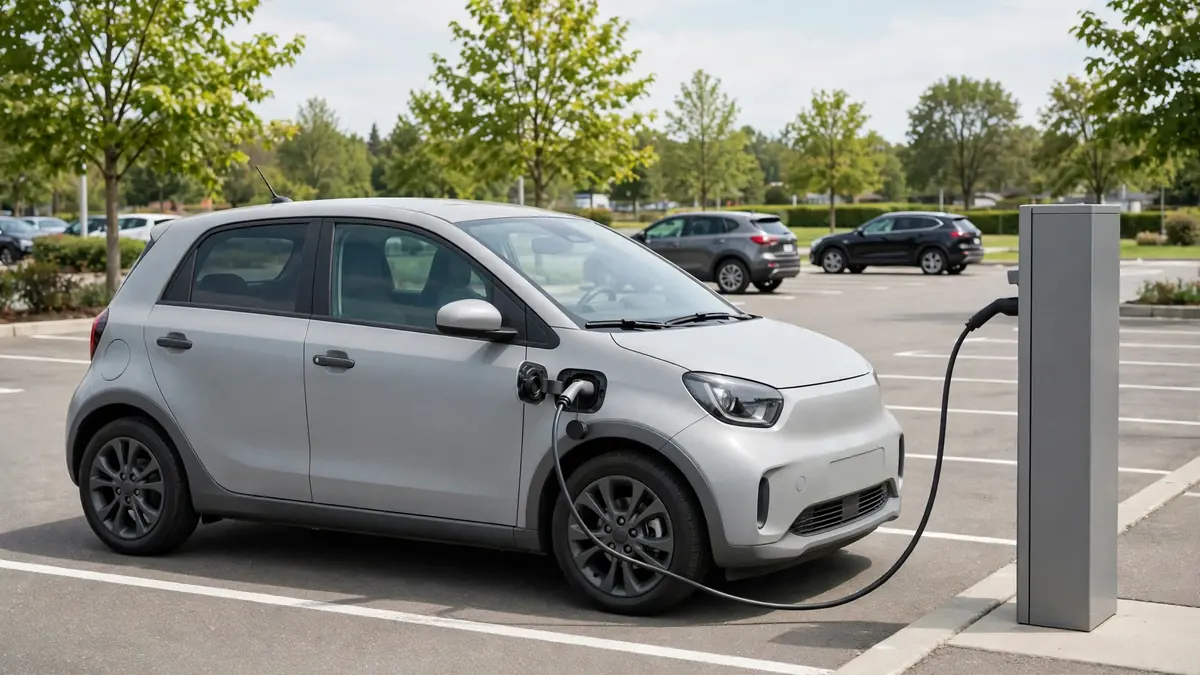
The Chevy Bolt has had a uniquely eventful battery history, including one of the largest automotive recalls in US history. Beyond the recall, Bolt owners report a specific set of battery and charging issues that differ from other EVs. This guide covers every significant Chevy Bolt battery problem, the recall history, and what to do if you’re experiencing any of these issues.
This guide belongs to our brand-specific battery problems section. For the full overview, see Audi e-tron Battery Problems.
At a Glance
The Chevy Bolt’s most significant battery problem was the 2021–2022 fire risk recall affecting 2017–2022 Bolt EVs and 2022 EUV models. Beyond the recall, Bolt owners commonly report slow DC fast charging (55 kW max on pre-2023 models, a hardware limitation, not a fault), the charge limit defaulting to 80–90% post-recall, and P1E00 fault codes from BMS anomalies. If your Bolt hasn’t had its recall battery repair, stop charging above 90% immediately and contact a GM dealer.
The Chevy Bolt Battery Recall: What You Need to Know
In August 2021, GM issued a safety recall for the 2017–2022 Chevy Bolt EV and 2022 Bolt EUV due to a risk of battery fire. Two simultaneous manufacturing defects in LG Energy Solution battery cells, a torn anode tab and a folded separator, could combine under specific conditions to cause a thermal runaway. Fires occurred during and after charging, and one fire occurred while driving.
The recall ultimately required replacement of battery modules in all affected vehicles, approximately 142,000 vehicles. As a precautionary measure during the repair period, GM instructed Bolt owners to:
- Not charge above 90% SOC
- Not leave the vehicle unattended while charging
- Not park inside a structure (garage or parking garage) after charging
Check your VIN at recalls.nhtsa.gov to confirm whether your Bolt has completed the recall battery replacement. A Bolt with the recall repair completed receives a new set of battery modules with a separate warranty on those replacement modules.

Common Chevy Bolt Battery Problems
Problem 1: Slow DC fast charging: 55 kW maximum
The 2017–2022 Chevy Bolt has a hardware maximum DC fast charge rate of 55 kW. This is not a fault, it’s the design specification of the Bolt’s onboard DC charging system. You cannot upgrade this through software updates. At 55 kW, a full charge from near-empty takes approximately 60 minutes. Many Bolt owners are surprised by this limitation, particularly when other EVs at the same CCS station charge at 100–350 kW.
The 2023 Bolt EV/EUV kept the same 55 kW maximum — GM never upgraded the Bolt’s DC charging hardware in any model year. If you need faster DC charging, a different EV model is the solution.
Problem 2: Charge limited to 80–90% after recall software update
As part of the recall mitigation, GM pushed software updates that limited charging to 80–90% maximum on some Bolt vehicles while the recall module replacement was pending. After the recall battery modules are replaced, the full charge limit should be restored. If your Bolt has had the recall repair but still seems limited, contact your GM dealer, the software limit should be removed after module replacement.
Problem 3: P1E00 fault code: Battery System Fault
P1E00 is the Bolt’s primary high-voltage battery fault code. It indicates the BMS detected an anomaly in the battery system. Given the Bolt’s recall history, any P1E00 code should be treated urgently, check recall status first, then get a full GM dealer diagnostic with their MDI2 tool. P1E00 is not resolvable by clearing the code, the underlying condition needs professional diagnosis.
Problem 4: Battery health decreasing faster than expected
Some Bolt owners report above-average capacity loss, particularly on vehicles that experienced the recall and had replacement modules installed. The replacement modules have their own chemistry characteristics and degradation rates. Use Car Scanner with an OBDLink MX+ adapter to read the Bolt’s BMS data including available capacity. Compare to the original 60 kWh (standard) or 65 kWh (2022) pack size.
Problem 5: Charging stops before the set limit
Some Bolt owners report the car stopping charging before reaching the configured limit, at 78% when set to 80%, for example. Common causes: the charge limit is being measured differently by the EVSE vs. the car’s BMS, a communication fault between the car and EVSE (try a different EVSE), or a BMS calibration issue. A BMS recalibration cycle and EVSE reset resolves most cases.
Problem 6: “Service High Voltage Charging System” message
This is the Bolt’s equivalent of a “Check Battery System” warning. It typically accompanies P1E00 or related fault codes. Do not ignore this message. Get an OBD2 scan (OBDLink MX+ with Car Scanner provides the most complete Bolt-specific data) and contact a GM dealer.
Chevy Bolt Battery Warranty
| Coverage | Details |
|---|---|
| Manufacturer battery warranty | 8 years / 100,000 miles, all 2017–2023 Bolt EV/EUV |
| Recall module replacement warranty | Separate warranty on replacement modules, ask dealer for specifics |
| Capacity minimum | Battery must retain minimum capacity per GM’s stated threshold |
Best OBD2 Tools for Bolt Diagnostics
- OBDLink MX+: Best adapter for GM-specific enhanced protocols that unlock full Bolt BMS data
- Car Scanner ELM OBD2: Best app for Bolt battery data with OBDLink adapter
- BoltAmpera app: Bolt-specific app with good battery visualization
- Torque Pro: Supports Bolt with proper PIDs but requires more setup than Car Scanner

FAQs
My Bolt had the recall battery replacement: is it safe to charge to 100% now?
Yes, after the recall module replacement is completed, GM removed the interim precautionary charging restrictions. You can charge to 100% and park indoors again. Confirm the repair is complete by checking your VIN at recalls.nhtsa.gov and verifying with your dealer that the recall is fully closed on your specific vehicle.
For a related problem, see Tesla Charge Port Latch Error: Causes and Fixes.
Is the 2023+ Bolt EV affected by the recall?
No. The recall covered 2017–2022 models. The 2023 Bolt EV and EUV were built after GM’s corrected cell production and were not part of the recall — though they share the same 55 kW DC fast-charging limit as every other Bolt.
Conclusion
The Chevy Bolt’s battery history is dominated by the 2021–2022 recall, if your Bolt hasn’t had the recall battery module replacement, that’s the first thing to address. Beyond the recall, the Bolt’s most common issue is the hardware 55 kW DC charging limit on pre-2023 models, a design limitation, not a fault. P1E00 codes and “Service High Voltage Charging System” messages require OBD2 scanning and dealer service. The 8-year/100,000-mile battery warranty covers hardware faults, document everything before any dealer visit.