Why Is My Hyundai Ioniq 5 Not Fast Charging

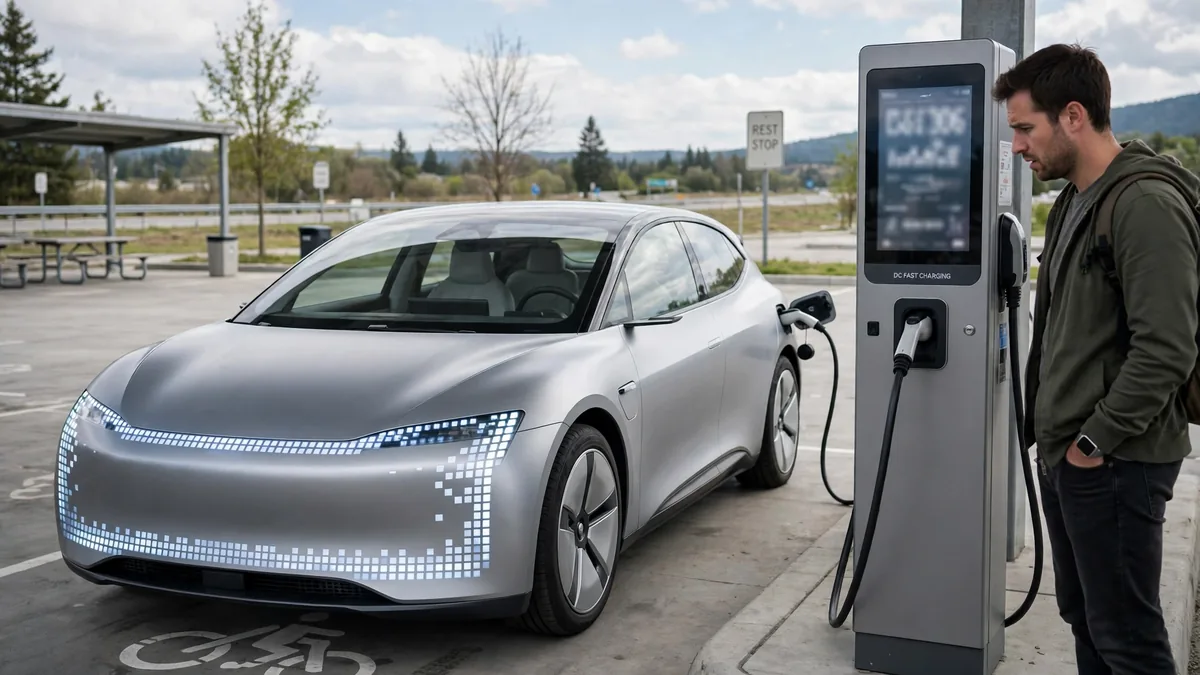
Your Hyundai Ioniq 5 isn’t fast charging at the speeds you expected. You plugged into a CCS station and got 70 kW when you expected 220 kW. Or you got 20 kW in cold weather and the car felt like it was barely charging. This guide explains every reason the Ioniq 5 doesn’t fast charge at full speed and the exact steps to maximize charging performance.
This guide belongs to our brand-specific battery problems section. For the full overview, see Audi e-tron Battery Problems.
The Answer in Brief
The Ioniq 5 typically charges at reduced speeds because it’s at a 400V CCS station (50–70 kW is normal there due to voltage conversion), the battery wasn’t preconditioned before arriving, or the battery is cold. The Ioniq 5’s advertised 220 kW rate is only available at 800V-capable charging stations with a properly pre-warmed battery arriving below 50% SOC. At standard 400V stations, 50–70 kW is working as designed.
Why 800V Architecture Changes Everything
The Ioniq 5 is an 800V vehicle in a predominantly 400V charging world. To use a standard 400V CCS charger, the Ioniq 5 runs its high-voltage battery through an internal converter, effectively halving the usable power. At a 400V charger, the converter caps the charge rate at approximately 50–70 kW regardless of the station’s maximum output.
This is not a malfunction. It’s how 800V vehicles charge at 400V infrastructure. The same physics applies to the Kia EV6, Porsche Taycan, and Genesis GV60, all 800V vehicles that see reduced rates at standard 400V stations.
Ioniq 5 Charging Speed by Station Type
| Station Type | Voltage | Ioniq 5 Rate (preconditioned, below 50% SOC) |
|---|---|---|
| 800V ultra-fast (EA 350 kW stalls) | 800V | 150–220 kW |
| Standard CCS (50 kW) | 400V | Up to 50 kW |
| Standard CCS (150 kW) | 400V | 50–70 kW (converter limited) |
| Standard CCS (350 kW, 400V) | 400V | 50–70 kW (converter limited) |
| Level 2 home (48A EVSE) | 240V AC | 10.9 kW |
Why Your Ioniq 5 Isn’t Fast Charging
Reason 1: You’re at a 400V station
Even stations labeled “150 kW” or “350 kW” are often 400V-based, they deliver that power through higher current at 400V, not through 800V. The Ioniq 5’s converter limits you to 50–70 kW at these stations regardless of their label. To get 150–220 kW, you need a station that is specifically 800V-capable. Electrify America’s 350 kW stations are the most widely available 800V option. Use PlugShare or the ABRP route planner to identify 800V stations on your route.
For a related problem, see Why Is My Chevy Bolt Charging Slowly.
Reason 2: Battery not preconditioned
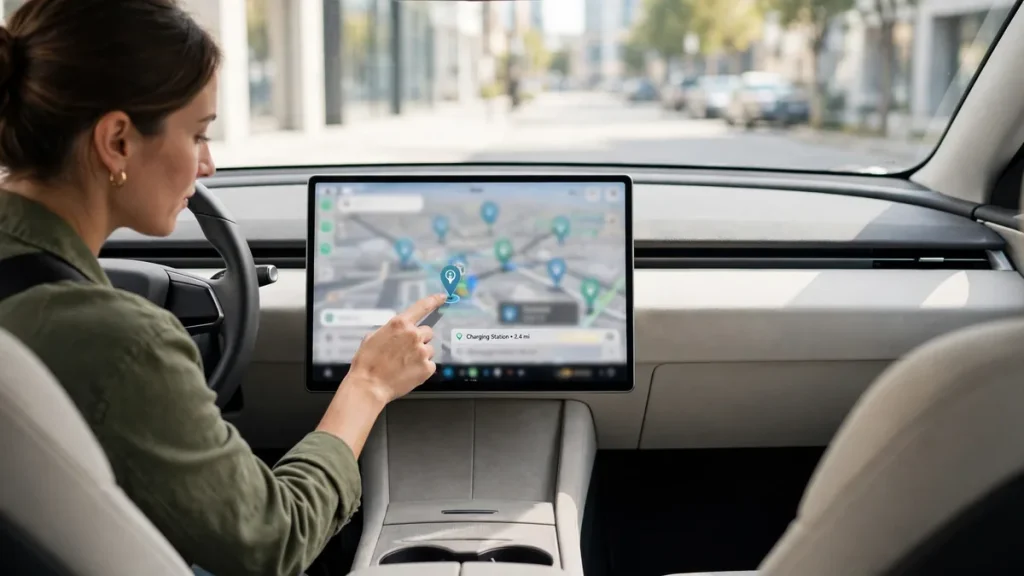
The Ioniq 5’s battery preconditioning activates only when you navigate to a charging station using the vehicle’s built-in navigation, not Waze, Google Maps, or Apple CarPlay. When the BMS knows a DC fast charge session is coming, it begins warming (or cooling) the battery to the optimal 60–80°F charging temperature before you arrive.
Without preconditioning, arriving with a cold battery (below 50°F) means the first 10–20 minutes of charging are at a reduced rate as the battery warms. At 20°F battery temperature, initial DC charge rates can be as low as 10–20 kW. Always use the built-in navigation to your charging destination to trigger preconditioning.
Reason 3: Battery above 50% SOC
DC fast charging is most efficient, and fastest, when the battery is below 50% SOC. Above 50%, the Ioniq 5 begins tapering its charge rate to protect cell longevity. Above 70%, the rate drops noticeably. If you arrive at a fast charger with 70–80% SOC, you’re already in the slow-taper zone, the charging session will naturally be slower per minute than arriving at 20% SOC.
Reason 4: Multiple consecutive fast charges without cooling break
The Ioniq 5 does well on long-distance drives with multiple charging stops, but the battery temperature increases with each fast charge session. By the second or third consecutive DC fast charge without a break, the battery is warmer than optimal and the BMS may implement a thermal protection rate reduction. Allow 20–30 minutes of driving at normal speeds between charging sessions to allow the thermal management system to lower battery temperature.
Reason 5: Software version on vehicle or at the station
Hyundai has delivered significant charging speed improvements through OTA software updates for the Ioniq 5. Early builds had lower peak rates and worse cold-weather preconditioning than current software versions. Check for pending updates in the Ioniq 5’s settings or through the Bluelink app. Station-side firmware also affects compatibility, some specific EA station firmware versions had poor Ioniq 5 compatibility that EA addressed in their own updates.
Reason 6: Specific CCS station compatibility issue
If one specific station consistently gives lower rates for your Ioniq 5 while other stations work normally, the specific station has a firmware issue affecting Ioniq 5 compatibility. Report the specific station location and stall number to Electrify America or the charging network operator. Also report it to Hyundai’s connected services team, they track compatibility issues across charging networks.
How to Get Maximum Ioniq 5 Fast Charging Speed
- Find an 800V-capable station: Electrify America 350 kW stalls, some EVgo Ultra-fast stalls. Filter PlugShare for 350 kW DC stations and check check-ins from Ioniq 5 owners for confirmed speed reports.
- Navigate with the Ioniq 5’s built-in navigation: Enter the specific charging station as your destination before leaving, not after arriving. The cluster will show “Battery Conditioning” or a temperature indicator warming up.
- Arrive with 15–40% SOC: This puts you in the peak power zone for the longest portion of the session and reduces total charging time.
- Keep software updated: Check Bluelink for OTA updates regularly. Hyundai has delivered meaningful charging improvements through updates.
- Allow 20–30 minutes between consecutive fast charges: If doing a multi-stop long-distance drive, don’t back-to-back fast charge without at least some driving between sessions.
FAQs
At what stations can the Ioniq 5 actually reach 220 kW?
The Ioniq 5 reaches 150–220 kW at Electrify America 350 kW stalls (available at most EA locations) and at EVgo Ultra-fast stalls in some markets. The station must specifically support 800V charging at high power. Use the ABRP (A Better Route Planner) app with the Ioniq 5 selected as your vehicle to find route-appropriate 800V stations.
My Ioniq 5 charged at 220 kW once but now only gets 150 kW at the same station: why?
Battery SOC and temperature at arrival vary between sessions. If the first visit had the battery colder but below 40% SOC with good preconditioning, and the second visit had the battery warmer but at 55% SOC with less preconditioning, the rates would differ. Conditions at arrival, not just the station, determine the achievable peak rate. Consistent 220 kW requires an 800V station, a preconditioned battery, and arriving below 40–50% SOC.
Conclusion
The Hyundai Ioniq 5 not fast charging at expected speeds is almost always explained by one of two things: a 400V station (where 50–70 kW is correct and expected) or a non-preconditioned cold battery. At a genuine 800V station with a preconditioned battery below 50% SOC and current software, the Ioniq 5 charges at 150–220 kW, among the fastest in the industry. The infrastructure gap between the car’s capability and available public charging is closing, but identifying and using 800V stations is currently the key to maximizing Ioniq 5 fast charging performance.