Why Is My Kia EV6 Not Fast Charging

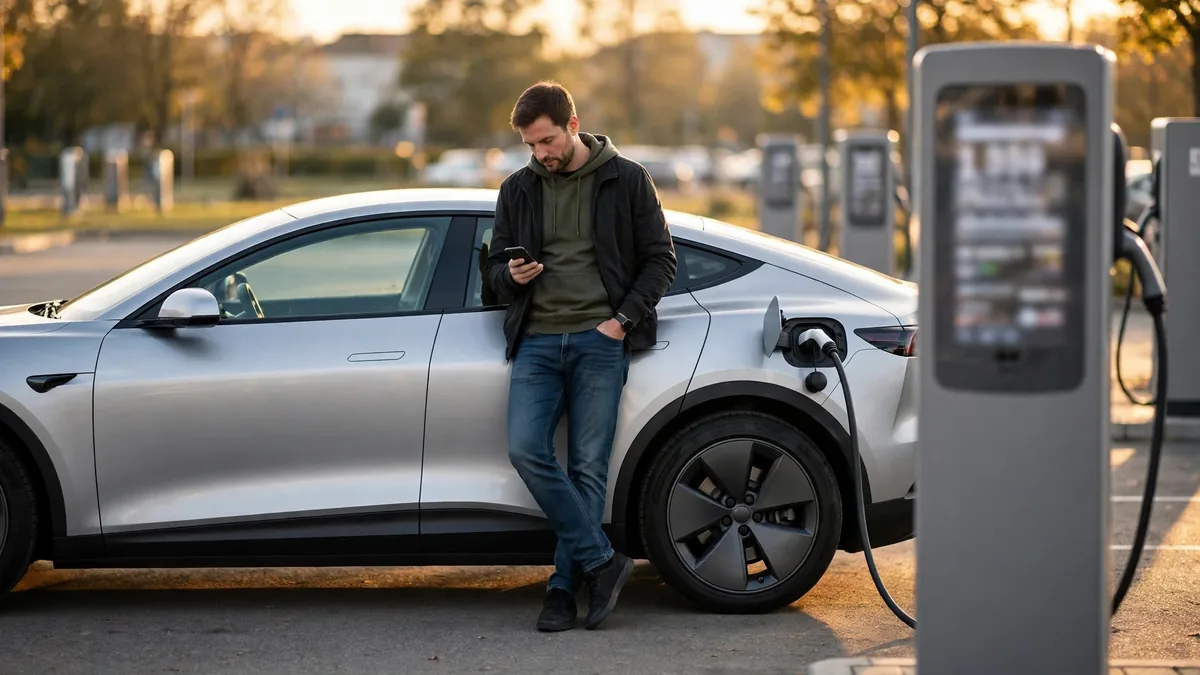
Your Kia EV6 isn’t fast charging at the speed you expect, arriving at a 350 kW CCS station and seeing 50–70 kW, or getting much lower rates than the advertised 233 kW peak. This guide explains exactly why EV6 DC fast charging is limited, what’s normal vs. what’s a real problem, and how to get the fastest possible charge on every session.
This guide belongs to our brand-specific battery problems section. For the full overview, see Audi e-tron Battery Problems.
What to Know First
The most common reason the Kia EV6 isn’t fast charging is a 400V station being used instead of an 800V station. The EV6’s 800V architecture delivers its peak 233 kW only at 800V-capable stations, the majority of public CCS stations in North America operate at 400V, where the EV6’s built-in converter limits the rate to approximately 50–70 kW. Cold battery temperature and not using built-in navigation for preconditioning are the other top causes.
Understanding EV6 Charging Architecture
The Kia EV6 uses an 800V high-voltage battery system, the same E-GMP platform as the Hyundai Ioniq 5. This enables extremely fast charging at 800V-compatible stations but creates a charging rate limitation at standard 400V stations:
| Station Type | Voltage | EV6 Rate |
|---|---|---|
| 800V ultra-fast (EA 350 kW, some EVgo) | 800V | Up to 233 kW (peak) |
| Standard CCS (most public chargers) | 400V | 50–70 kW (converter limited) |
| Level 2 (home or public) | 240V AC | 10.9 kW max (RWD) / 10.9 kW (AWD) |
| Level 1 (120V) | 120V AC | 1.6 kW |
The 800V → 400V compatibility works through the EV6’s built-in “Intelligent Load Control”, a voltage conversion system that allows the car to use 400V chargers at all. But this conversion comes with a power ceiling of approximately 50–70 kW. This is not a fault, it’s how the 800V architecture interfaces with 400V infrastructure.
Causes of Slow EV6 Fast Charging
Cause 1: 400V station: most common reason
The vast majority of public CCS stations in North America are 400V-based, including many stations labeled “150 kW” or even some “350 kW” stations that use 400V with high current rather than true 800V. If you’re seeing 50–70 kW at a public CCS station, confirm whether the station supports 800V. Electrify America’s 350 kW stations are true 800V-capable. Most other CCS networks primarily offer 400V stations.
Cause 2: Battery not preconditioned: critical for cold weather
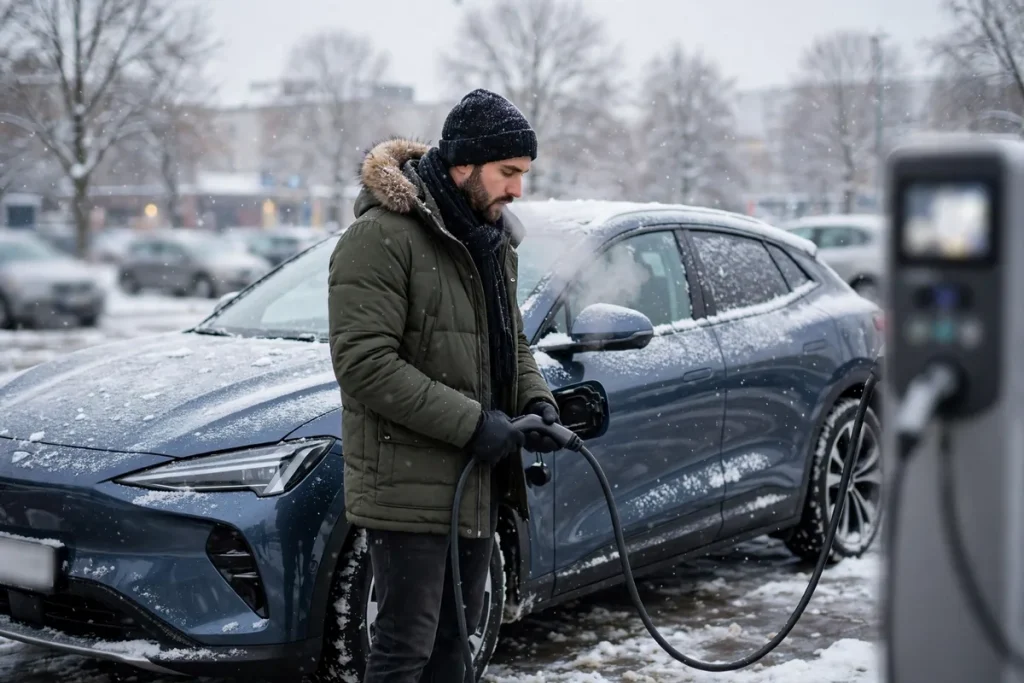
The EV6’s battery preconditioning system activates automatically when you navigate to a charging station using the EV6’s built-in navigation. If you navigate with Apple CarPlay, Google Maps, or go directly to the charger without navigating, the battery will not be preconditioned. In cold weather, an unpreconditioned EV6 battery may begin charging at just 10–30 kW, gradually increasing over 15–20 minutes as the battery warms.
To trigger preconditioning: use the EV6’s built-in navigation. Enter the charging station as your destination. The instrument cluster will show “Battery Conditioning” as you approach. Arrive with a warm battery and full-speed charging begins immediately.
Cause 3: High SOC at the fast charger
The EV6’s peak 233 kW rate is achieved only between approximately 10–50% SOC. Above 50%, the rate begins tapering. Above 70%, it’s dropped noticeably. Above 80%, DC fast charging is much slower by design. Arriving at a fast charger with 70–80% SOC means you’re already in the taper zone, you won’t see peak rates.
Cause 4: Software version: older firmware had known charging limitations
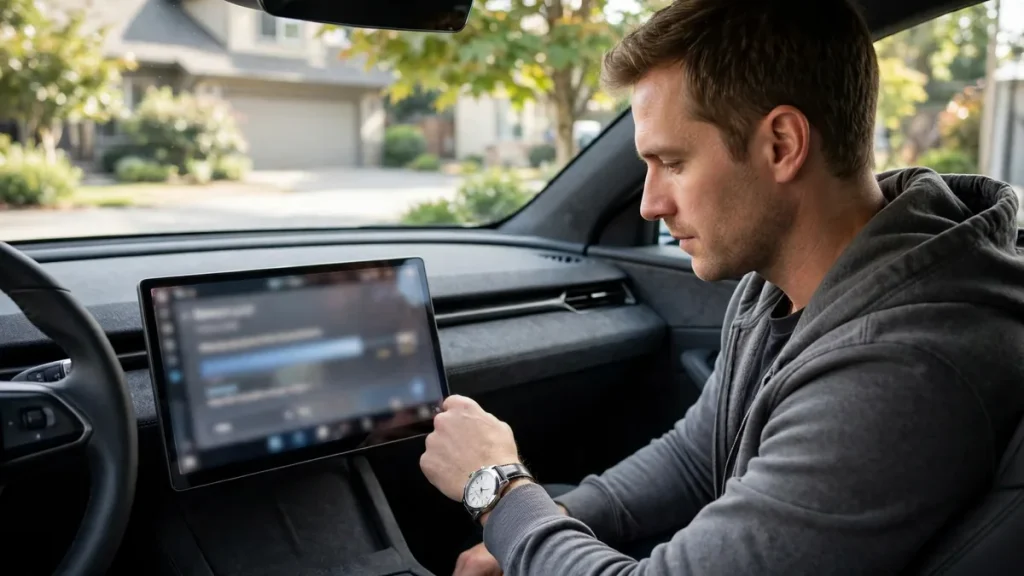
Early EV6 builds (particularly 2022 model year) had known charging-related software issues that limited compatibility with certain CCS station configurations and reduced peak rates. Kia has pushed multiple OTA updates addressing these limitations. Check for and install any pending software updates via the UVO Link (Kia’s connected services platform) or at a Kia dealer.
Cause 5: Specific CCS station compatibility issue
Some EV6 owners report consistently low rates at specific stations that other EVs use normally at higher speeds. This is a station firmware ↔ EV6 software compatibility issue. Try a different stall, try a different CCS network to isolate, and report the issue to both Kia and the charging network operator with specific station details.
Cause 6: Consecutive fast charges without cooling break
If you’ve done multiple DC fast charges in a single day without allowing the battery to cool between sessions, the battery temperature rises progressively. The BMS reduces the charging rate to protect the cells from heat stress. Allow 20–30 minutes of low-speed driving between fast charge sessions to allow the thermal management system to dissipate heat before the next charge.
How to Get Maximum Fast Charging Speed on the EV6
- Find an 800V-capable station: Electrify America’s 350 kW stations are the most widely available 800V option in North America. Use PlugShare to filter for 350 kW stations and check user check-ins to confirm 800V support.
- Navigate with the EV6’s built-in navigation: Essential for automatic preconditioning. Enter the specific charging station as your destination before leaving, not after arrival.
- Arrive with less than 50% SOC: This keeps you in the peak power zone for as long as possible during the session.
- Keep software updated: Kia delivers charging improvements through OTA updates. Check UVO for pending updates or have a dealer scan for available updates.
- Allow 15–20 minutes for cold battery to warm: Even with preconditioning, very cold conditions may require a few minutes of lower-rate charging before reaching peak speed.
EV6 Fast Charging at Electrify America: Tips
Electrify America has the most 800V-compatible 350 kW stations in North America. Tips specific to EA:
For a related problem, see Why Is My Chevy Bolt Charging Slowly.
- Look for “350 kW” labeled stalls specifically, EA sites often have mixed 150 kW (400V) and 350 kW (800V) stalls
- EV6 2022 had documented EA compatibility improvements through software updates, ensure the EV6 is on the latest software
- Use the EA app to check stall availability and initiate the session through the app if card authentication fails
- EA is included in Kia’s charging benefit package for new EV6 purchases, check your purchase documentation for complimentary fast charging sessions
FAQs
My EV6 shows “Charging” at 50 kW at a 150 kW station: is my car broken?
No. A 150 kW CCS station is almost certainly a 400V station. At 400V, the EV6 is capped by its voltage converter at approximately 50–70 kW, fully consistent with your experience. The car is working as designed. To see higher rates, you need a true 800V station rated at 350 kW.
Is the EV6 GT (performance model) faster to charge?
Yes, the EV6 GT supports the same 800V architecture and up to 240 kW peak charging rate at compatible stations. It uses the same preconditioning requirements as the standard EV6, built-in navigation to the station is required to trigger preconditioning. At 400V stations, the GT is similarly limited to 50–70 kW.
Conclusion
The Kia EV6 not fast charging at expected speeds is almost always either a 400V station (infrastructure), a cold non-preconditioned battery (process), or an older software version (software update needed). At a true 800V-capable 350 kW station with a preconditioned battery below 50% SOC and current software, the EV6 charges at 150–233 kW, among the fastest in the industry. The infrastructure is still catching up to the EV6’s capability.