How Much Does EV Battery Diagnosis Cost?

Before you schedule a dealer appointment for your EV battery, it helps to know exactly what that visit will cost, and whether you actually need one. This guide breaks down every type of EV battery diagnostic, what each costs, and how to get the most information for the least money.
This guide belongs to our general guides section. For the full overview, see Common EV Battery Problems and How to Fix Them.
The Answer in Brief
A basic EV battery diagnostic scan at a dealer costs $100–$200. A full battery health inspection with individual cell testing costs $200–$400. If the car is under the 8-year/100,000-mile manufacturer battery warranty, diagnostics and qualified repairs are typically free. You can skip the dealer fee entirely for basic fault code reading with a $20–$80 OBD2 scanner at home.
EV Battery Diagnostic Cost Breakdown
| Type of Diagnostic | Who Does It | Cost | What You Get |
|---|---|---|---|
| OBD2 fault code scan (DIY) | You, at home | $20–$80 (one-time tool cost) | Stored fault codes, live battery data |
| Dealer basic scan | Dealer technician | $100–$200 | Fault codes + brief technician assessment |
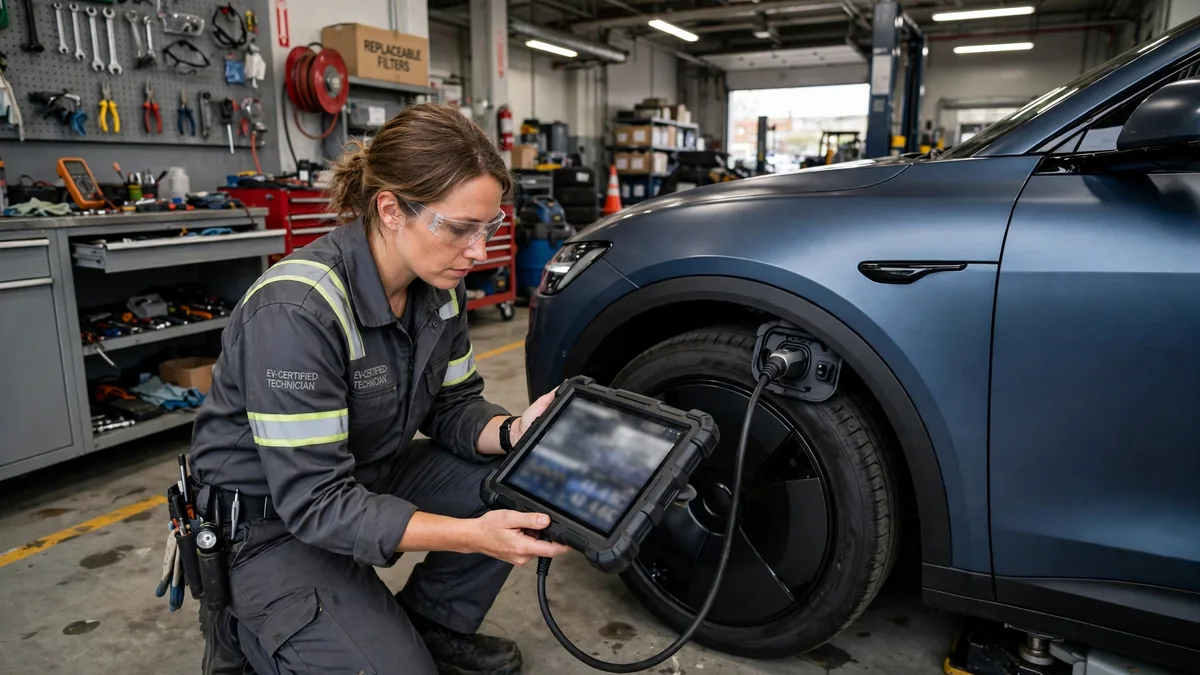
| Full battery health inspection | EV-certified dealer | $200–$400 | Cell voltages, SOH, capacity test, written report |
| Third-party EV shop inspection | Independent EV mechanic | $100–$300 | Varies by shop, ask for a written SOH report |
| Manufacturer warranty diagnostic | Authorized dealer | Free (if under warranty) | Full manufacturer-level battery diagnosis |
When the Diagnostic Is Free
You should not pay for a battery diagnostic in these situations:
- Car is under the 8-year/100,000-mile manufacturer battery warranty: All battery-related diagnostics and qualifying repairs are typically free. This applies to Tesla, Ford, Chevy, Hyundai, Kia, Nissan, Rivian, VW, BMW, Mercedes, Audi, Polestar, and all other EVs sold in the US.
- Active recall: If your vehicle has an open safety or battery recall (like the Chevy Bolt battery recall), all diagnosis and repair related to that recall is free.
- Dealer waives the fee for repairs: Most dealers will apply the diagnostic fee toward the cost of any repair done at the same visit. Ask about this before authorizing the scan.
- Lemon law or manufacturer goodwill: If you’ve had the same recurring battery issue multiple times, manufacturers sometimes offer free diagnosis as a goodwill gesture to avoid legal disputes.
How to Save Money on EV Battery Diagnostics
Option 1: Do the OBD2 scan yourself first
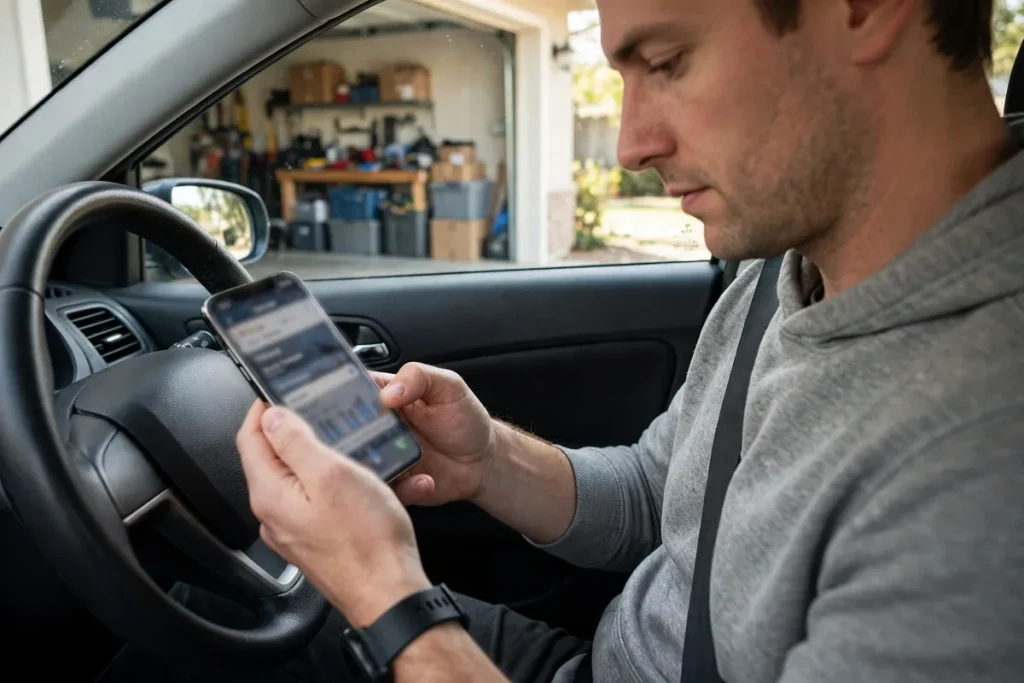
A Bluetooth OBD2 adapter and a free or low-cost app can read most EV fault codes in 5 minutes. This doesn’t replace a dealer scan for complex issues, but it tells you what you’re dealing with before you spend money. If the code is something simple, a calibration error, a temperature-related flag, or a known software issue, you might fix it yourself without ever visiting a dealer.
Best OBD2 tools by brand:
- Nissan Leaf: Leafspy Pro ($14.99 app) + ELM327 Bluetooth adapter ($15–$25)
- Chevy Bolt: OBD Fusion or Torque Pro + ELM327 adapter
- Hyundai / Kia EVs: Car Scanner ELM OBD2 app (free) + ELM327 adapter
- Ford Mach-E / Lightning: FORScan (free, Windows) + OBDLink EX adapter ($60)
- Tesla: ScanMyTesla + BLE OBD2 adapter (~$50)
- VW ID.4: OBD Eleven app + OBD Eleven adapter ($100)
- BMW i4: Carly app + Carly adapter ($80)
Option 2: Go to an independent EV shop instead of the dealer
Independent EV mechanics typically charge 30–50% less than dealers for diagnostic work. They use the same OBD2 tools and have access to the same manufacturer technical service bulletins (TSBs). The downside: for warranty work, you must go to an authorized dealer. But for out-of-warranty diagnosis, an independent shop is often just as capable and much cheaper.
Option 3: Call the manufacturer’s EV support line first
Tesla, Ford, Hyundai, Kia, Rivian, and others have dedicated EV support lines. Describe your symptoms and they can often pull diagnostic data remotely from the car (if you consent to remote access). In some cases, they can identify the problem and recommend a fix without you ever going to a dealer. For Tesla especially, the support team can push software patches and run remote diagnostics through the cellular connection.
What a Full Battery Health Inspection Includes
When you pay for a full battery health inspection at an EV-certified dealer, here’s what you should expect to receive:
For a related problem, see Can a Software Update Fix EV Battery Issues?.
- Complete fault code readout from all control modules
- State of Health (SOH) measurement showing remaining capacity vs original
- Individual cell voltage readings to identify weak or dead cells
- Battery temperature sensor check
- Charging system test (onboard charger function)
- Contactor operation test
- Written report with findings and recommendations
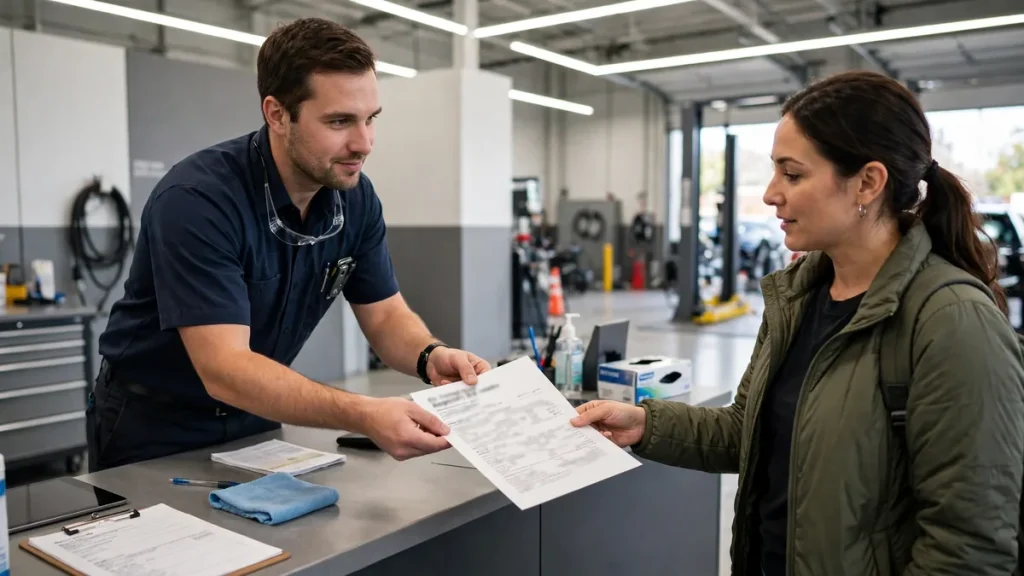
Always ask for a written report. Some dealers give verbal summaries only, a written report is what you need to support a warranty claim or insurance claim.
Questions to Ask Before Authorizing a Diagnostic
- “Is this vehicle still under the battery warranty? Can you check before we start?”
- “Will the diagnostic fee be waived if I proceed with the repair here?”
- “Is there an open recall on my vehicle’s battery? I’d like that checked first.”
- “Can I get a written report of the findings including the fault codes and SOH?”
- “Do you have EV-certified technicians on staff?”
Red Flags to Watch For
- A dealer that charges for a diagnostic on a car clearly under warranty
- A shop that won’t give you the fault codes in writing
- Any shop recommending a full battery pack replacement without showing you cell-level data justifying it
- A dealer that won’t honor the manufacturer’s 8-year/100,000-mile battery warranty, escalate to the manufacturer directly
FAQs
How long does an EV battery diagnostic take?
A basic fault code scan takes 30–60 minutes. A full battery health inspection with cell-level testing takes 2–4 hours. If the car needs to charge to a specific level before testing, add another 1–2 hours. Call ahead to schedule and ask the dealer what charge level to arrive at.
Can any mechanic diagnose an EV battery?
Not reliably. EV battery diagnosis requires brand-specific software tools that general mechanics don’t typically have. A regular mechanic can read basic OBD2 fault codes, but deep battery diagnostics, cell voltages, SOH measurement, high-voltage contactor testing, require manufacturer-specific scan tools and EV-certified training.
Should I get a battery diagnostic before buying a used EV?
Yes, absolutely. A pre-purchase battery inspection costs $100–$300 and tells you the SOH before you commit to buying. A used EV with 75% SOH is worth noticeably less than one with 92% SOH, that inspection pays for itself immediately in negotiating leverage or in avoiding a bad purchase.
Conclusion
EV battery diagnostics range from free (DIY OBD2 scan) to $400 (full dealer battery health inspection). If your car is under the manufacturer’s 8-year/100,000-mile warranty, you typically won’t be charged, the diagnosis and qualifying repairs are free. For out-of-warranty cars, start with a $20–$80 OBD2 scanner at home before spending money at a dealer. Always get your findings in writing, and always ask whether the diagnostic fee will be applied to your repair bill.