Why Is My EV Range Lower Than Expected?

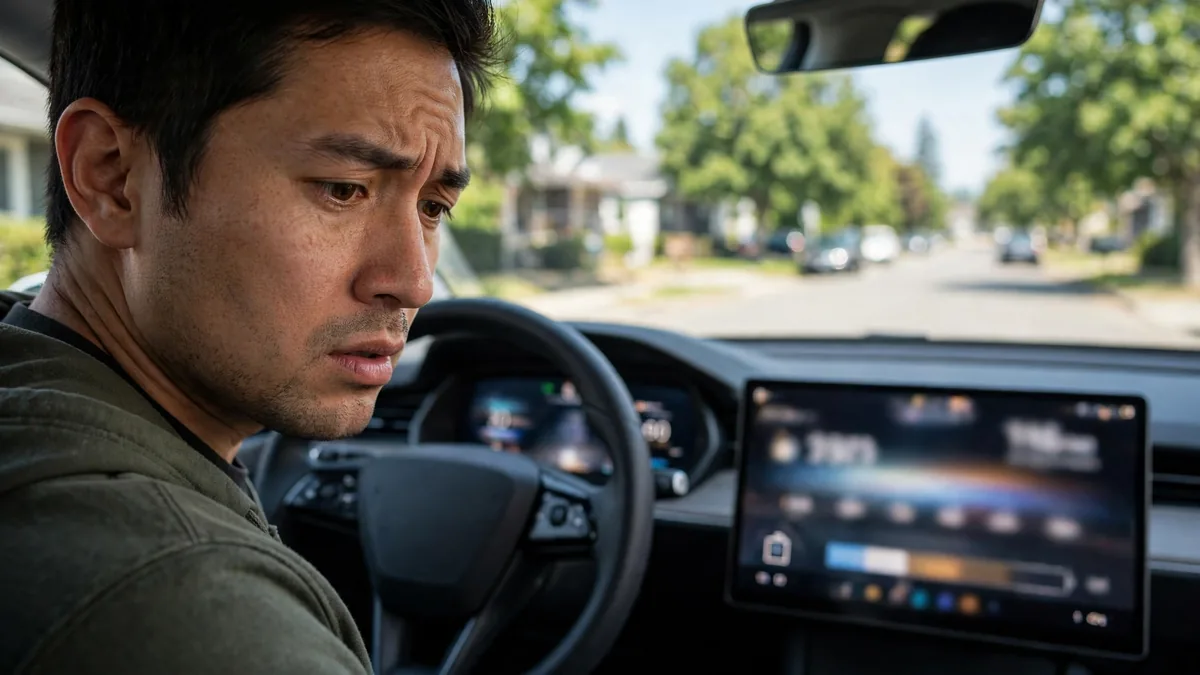
Your EV showed a full charge when you parked it, but now the range estimate is 20, 30, or even 50 miles lower than you expected. Before you assume the battery is failing, know this: most cases of lower-than-expected range have simple, fixable causes. This guide tells you exactly why it happens and what to do.
This guide belongs to our EV range problems section. For the full overview, see EV Range in Sport vs Eco Mode.
Short Version
EV range is lower than expected most often because of cold or hot weather, driving speed, accessory use (heat, A/C, heated seats), or a BMS that needs recalibration. True battery degradation takes years to develop and accounts for only 2–3% range loss per year on average. Check temperature and recent driving patterns before assuming a hardware problem.
What Causes Lower-Than-Expected EV Range?
| Cause | Range Impact | Permanent? |
|---|---|---|
| Cold weather below 40°F | 20–40% less | No, returns when warm |
| Hot weather above 95°F | 5–15% less | No, returns when cool |
| Highway driving at 70+ mph | 20–30% less vs city | No, driving style |
| Cabin heat use | 10–20% less | No, use seat heaters instead |
| A/C use in summer | 5–15% less | No, use cabin pre-cool |
| Battery degradation | 2–3% per year | Yes, gradual and permanent |
| BMS needs recalibration | Estimate only, no real loss | No, one full cycle fixes it |
| Software update changed algorithm | Varies | No, patch usually follows |
| Cell imbalance | 5–15% less | Maybe, needs dealer check |
How to Diagnose the Problem
Step 1: Check the temperature
Cold is the #1 reason EVs show lower range than expected. Lithium-ion cells slow down in cold temperatures, they hold less usable charge and deliver less power. At 20°F, you can lose 30–40% of your normal range. This is not a malfunction. The range comes back when the battery warms up during driving or when outdoor temperatures rise.
Heat affects range too, but less dramatically. At 95°F+, your battery cooling system runs constantly, and the A/C draws more power. Expect 5–15% range reduction in hot weather.
Step 2: Look at what you’ve been running
The cabin heater in an EV is one of the biggest battery drains there is. Unlike gas cars that use waste engine heat to warm the cabin, EVs have to generate that heat electrically. Running the heater on full can reduce range by 15–20 miles per hour of use. If you’ve been driving in cold weather with the heat on, that explains the lower-than-expected range.
Seat heaters and steering wheel heaters are far more efficient than cabin heat. Use them first, they keep you warm for a fraction of the energy.
Step 3: Consider your driving speed
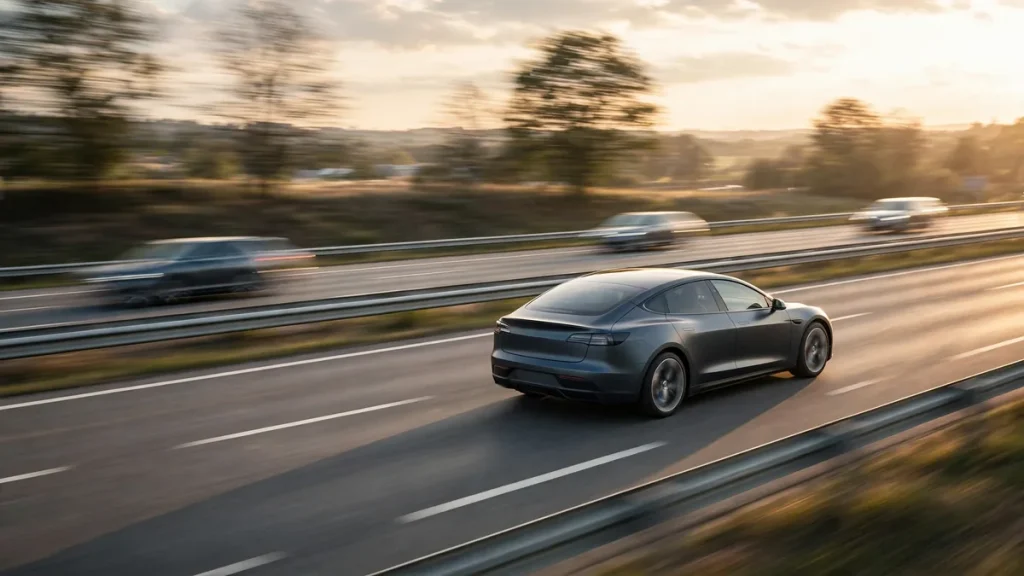
Air resistance (drag) grows exponentially with speed. Driving at 75 mph uses noticeably more energy than driving at 55 mph. Most EV range ratings are calculated at a mixed speed cycle, not highway-only driving. If you’re mostly highway driving, expect 20–30% less range than the EPA estimate.
Step 4: Check if the BMS needs recalibration
Over time, the BMS can lose track of the battery’s true capacity, especially if you always charge between 20–80% and never do a full cycle. The result is an inaccurate range estimate, not actual capacity loss. The car thinks it has less range than it actually does.
To recalibrate: let the battery run down to around 10%, then charge all the way to 100%. Do this once every few months. After one full cycle, the BMS resets its estimate and range readings become accurate again.
Step 5: Check for a recent OTA software update
According to my experience, one of the sneakiest causes of sudden range loss is an OTA update that changes how the BMS calculates or displays range. Tesla, Hyundai, Kia, and others have had software updates that temporarily reduced displayed range estimates. Check your car’s update history in the app. If range dropped the same day as an update, check owner forums, a fix is usually released within a few weeks.
Step 6: Check actual battery health
If none of the above apply, your battery may have experienced real capacity loss. You can check this with an EV-compatible OBD2 scanner (like the Leafspy app for Nissan Leaf, or ScanMyTesla for Tesla) which shows your actual battery capacity vs. original. Many dealers will also run a battery health check for free if the car is under warranty.
How to Fix It: Step by Step
Fix 1: For cold weather range loss
- Preheat the cabin while still plugged in, this uses grid power instead of battery power
- Park in a heated garage when possible
- Use seat heaters instead of full cabin heat
- Reduce highway speed by 5–10 mph in cold weather
- Enable battery preconditioning if your car has it (Ioniq 5, EV6, Tesla, Rivian all support this)
Fix 2: For BMS recalibration
- Do a full discharge/charge cycle: drive to ~10%, then charge to 100%
- Leave it at 100% for 1–2 hours before driving to let the BMS fully update
- Don’t do this more than once per month, regular deep discharges accelerate degradation
Fix 3: For driving efficiency
- Switch to Eco or Range mode if available
- Use regenerative braking on the highest setting
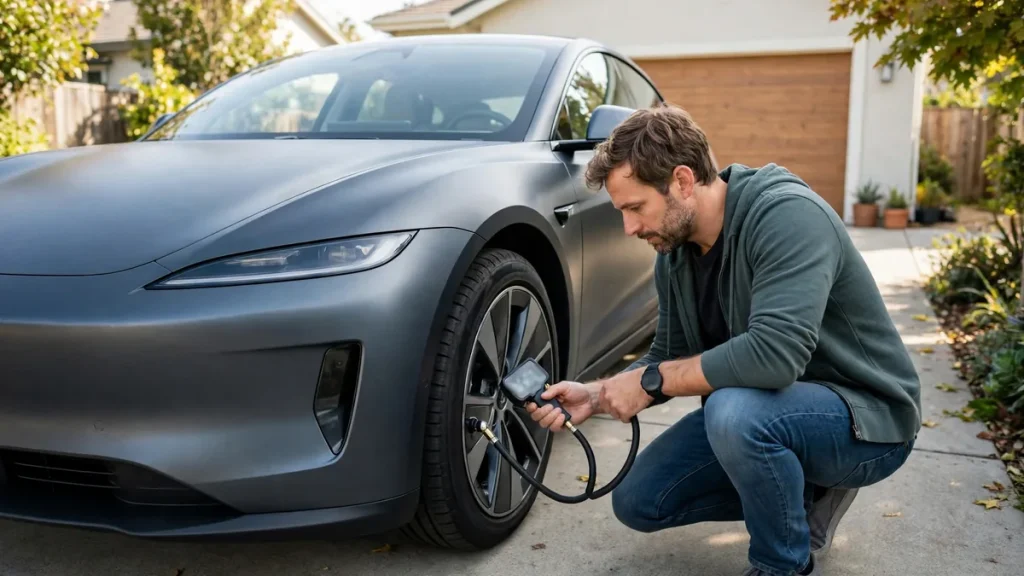
- Keep tires inflated to the recommended PSI, under-inflated tires increase rolling resistance and cut range
- Slow down on the highway, going 65 instead of 75 mph can add 20–30 miles of real-world range
Fix 4: For real battery degradation
If your battery has genuinely lost capacity, check whether it’s covered under warranty. Most automakers cover the battery pack for at least 8 years or 100,000 miles. If your car is within this window and has lost more than 20–30% of its original range (the exact threshold varies by brand), you may qualify for a free battery replacement or module swap.
Warranty degradation thresholds by brand:
- Tesla: 70% retention over warranty period
- Hyundai/Kia: 70% retention, 10 years/100,000 miles
- Chevy Bolt: 60% retention (per GM)
- Nissan Leaf: 9 of 12 capacity bars must remain
- Ford (Mach-E, Lightning): Covered under 8-year/100,000-mile minimum coverage
- Rivian: 8 years/175,000 miles
- VW ID.4: 70% retention, 8 years/100,000 miles
When to Contact a Dealer
Contact a dealer if range has dropped more than 20% and the weather, driving style, and accessories can’t explain it; if range is declining month over month even in mild weather; if the range estimate jumps around erratically (40% one moment, 10% the next); or if the car is showing cell imbalance fault codes alongside the range loss.
For a related problem, see Why Did My EV Range Drop Suddenly?.
Can You Continue Driving?
Yes, lower-than-expected range is not a safety issue in most cases. Just plan your trips around the reduced range until you identify and fix the cause. If range dropped so severely that you can’t make normal trips, don’t risk getting stranded, charge more often until the problem is diagnosed.
How to Prevent Range Loss
- Keep daily charging between 20–80% to slow long-term degradation
- Precondition the battery before driving in cold weather while plugged in
- Keep software up to date, OTA updates often improve range estimation accuracy
- Check tire pressure monthly, even 5 PSI low can cost 5–10 miles of range
- Avoid leaving the battery at 100% for extended periods
- Avoid regularly charging to 100% unless needed for long trips
FAQs
Is losing 20 miles of range in cold weather normal?
Yes, completely normal. Losing 20–40% of range in temperatures below 32°F is expected behavior for all EVs. The range fully recovers when temperatures rise or the battery warms up from driving.
Why does my range estimate change every morning?
Range estimates are calculated based on recent energy consumption, outside temperature, and battery temperature at startup. All three of these change daily, so the estimate naturally varies. It’s not a sign of battery problems, it’s the BMS being accurate about real-world conditions.
My EV lost 30 miles of range after an update: is it damaged?
Not damaged, but the update may have changed the range calculation formula or adjusted battery usage limits. Check the manufacturer’s update notes and owner forums. These changes are usually reversed or refined in a follow-up update. Your physical battery capacity is almost certainly unchanged.
Conclusion
Lower-than-expected EV range is almost always caused by temperature, driving habits, accessory use, or a BMS that needs recalibration, not a failing battery. Work through the causes in this guide before worrying about hardware. If you’ve ruled everything else out and the range loss is consistent and severe, check your warranty, you may be entitled to a free battery repair at no cost.