How to Escalate an EV Battery Problem to Manufacturer

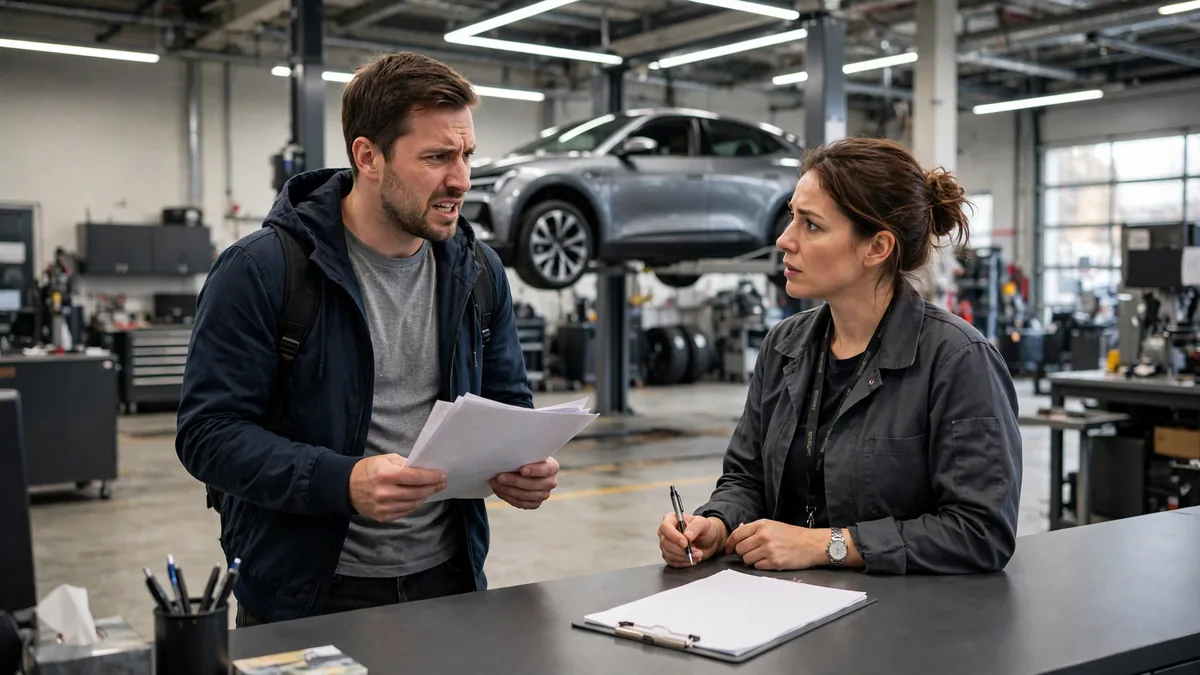
The dealer told you there’s nothing wrong. Or they acknowledged the problem but aren’t moving fast enough. Or you’ve been back three times for the same issue. Whatever the situation, escalating a battery problem to the manufacturer is your right, and it’s more effective than most EV owners realize. This guide shows you exactly how to do it.
This guide belongs to our general guides section. For the full overview, see Common EV Battery Problems and How to Fix Them.
The Short Answer
If a dealer isn’t resolving your EV battery problem, escalate directly to the manufacturer’s customer relations team. Document every visit with dates, fault codes, and repair orders. Reference your manufacturer’s 8-year/100,000-mile battery warranty explicitly. If the manufacturer also fails to resolve it, file a complaint with the NHTSA at nhtsa.gov and consult a lemon law attorney if the problem is recurring and unresolved.
How to Escalate, Step by Step
Step 1: Build Your Paper Trail First
Before you escalate, make sure you have documentation. Manufacturers take escalations far more seriously when you can show a clear record of the problem and what’s been done about it.
Gather all of these:
- Every dealer repair order (RO) from every service visit, including visits where “no problem found”
- Dates and descriptions of every time the problem occurred
- Screenshots of warning lights, error messages, and app alerts
- OBD2 fault codes you read yourself (if applicable)
- Your current battery SOH reading if you have it
- Photos of any physical issues (warning lights, charging port, dashboard)
- Your vehicle’s VIN, purchase date, and current mileage
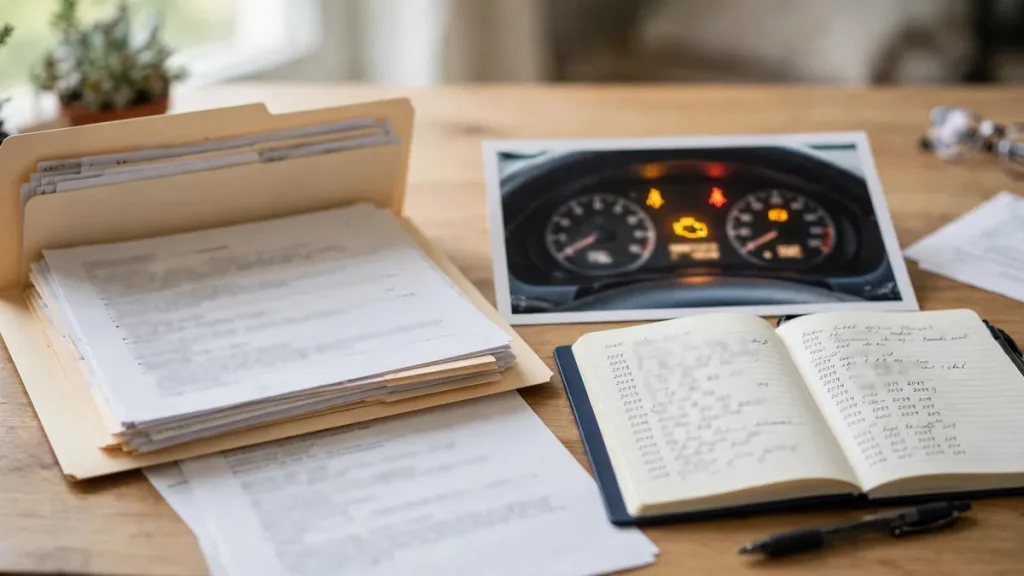
According to my experience, the single most important document is the repair order from the dealer, specifically any RO that says “no defect found” or “unable to duplicate.” This language is important for lemon law purposes and for forcing the manufacturer to take the complaint seriously.
Step 2: Contact Manufacturer Customer Relations
Every EV manufacturer has a dedicated customer relations or owner experience team. This is separate from dealer service, they have authority the individual dealer doesn’t, including the ability to authorize repairs, offer goodwill replacements, and escalate to regional technical teams.
How to reach them:
- Tesla: Contact through the Tesla app → Help → Contact Support. For escalations: tesla.com/contact or call 1-877-798-3752
- Ford: 1-800-392-3673 or ford.com/support
- Hyundai: 1-800-633-5151 or hyundaiusa.com/contact
- Kia: 1-800-333-4542 or kia.com/us/en/contact-us
- Chevy / GM: 1-800-222-1020 or chevrolet.com/electric/support
- Nissan: 1-800-647-7261 or nissan-usa.com/contact
- Rivian: Through the Rivian app or rivian.com/support
- VW: 1-800-822-8987 or vw.com/en/contact
- BMW: 1-800-831-1117 or bmwusa.com/contact
- Mercedes: 1-800-367-6372 or mbusa.com/en/contact
- Audi: 1-800-822-2834 or audiusa.com/en/contact
- Polestar: Through the Polestar app or polestar.com/contact
When you call or write, be specific and calm. State your VIN, describe the problem clearly, list the dates and repair order numbers from your dealer visits, and explicitly state that you believe the issue is covered under the 8-year/100,000-mile manufacturer battery warranty.
Step 3: Request a Regional Technical Specialist
If the customer relations team isn’t moving things forward, ask specifically for a regional technical specialist or field service engineer to be assigned to your case. Every major manufacturer has field tech teams that support dealers with difficult diagnoses. Requesting their involvement signals that you’re serious and knowledgeable, and it often produces results when front-line customer service hasn’t.
Step 4: Send a Formal Written Complaint
If phone calls aren’t getting results, send a formal written complaint, either by email or certified mail. A written complaint creates a timestamped record and often receives more serious attention than phone calls. Include:
- Your full name, address, and contact information
- Vehicle VIN, purchase date, and current mileage
- Detailed description of the battery problem
- Dates of all dealer visits and repair order numbers
- Statement that the issue is unresolved and you believe it’s covered under warranty
- A specific request: battery replacement, module replacement, extended warranty, or compensation
- A deadline for response (10–14 business days is standard)

A Sample Complaint Letter You Can Copy
Subject: Formal complaint — unresolved battery defect, VIN [your VIN]
Dear [Manufacturer] Customer Relations,
I am the owner of a [year, make, model], VIN [your VIN], purchased on [purchase date]. The car currently has [mileage] miles. Since [date the problem started], it has had the following battery problem: [describe the fault in one or two sentences].
The car has been to [dealer name] on [visit dates], under repair orders [RO numbers]. The problem is still unresolved. I believe this defect is covered by the 8-year/100,000-mile battery warranty.
I am asking for [a battery replacement / a module replacement / a buyback review] and a written response within 14 business days.
[Your full name] · [Your address] · [Your phone] · [Your email]
Step 5: File an NHTSA Complaint
The National Highway Traffic Safety Administration (NHTSA) maintains a public database of vehicle defect complaints. Filing a complaint at nhtsa.gov/report-a-safety-problem does several things:
For a related problem, see EV Battery Problems You Should Never Ignore.
- creates a permanent record with NHTSA of your problem
- Contributes to safety trend analysis that can trigger investigations
- Shows the manufacturer that you’re engaging a federal safety agency, which accelerates their response
- May help other owners with the same problem
NHTSA complaints have been instrumental in triggering recall investigations, including the Chevy Bolt battery recall. Your complaint may matter more than you think.
Step 6: Consider Lemon Law if the Problem Keeps Coming Back
If the same battery problem has occurred multiple times, the car has been out of service for an extended period due to repair, and the manufacturer hasn’t resolved it, you may have a lemon law claim. Lemon law applies differently in each state, but in most states, 3–4 attempts to fix the same defect, or 30+ cumulative days out of service, qualifies.
Lemon law can result in a full vehicle replacement or a buyback at the original purchase price minus a usage fee. Consult a lemon law attorney, many offer free consultations and work on contingency, meaning you pay nothing unless you win.
How to Escalate for Specific Brands
Tesla escalation path
Tesla’s dealer is Tesla, there’s no third-party dealership layer. If a service center isn’t resolving your issue, escalate through the app to get a case manager assigned. For persistent problems, request a senior technician review or a vehicle audit. Tesla’s executive escalation email (found through owner forums) is known to produce results when other channels fail.
Chevy Bolt specific escalation
For battery-related Bolt issues, always check whether your vehicle has any open recalls at nhtsa.gov/recalls before escalating. The 2017–2023 Bolt battery recall means GM is obligated to replace affected batteries, if a dealer is delaying your recall repair, escalating to GM directly at 1-800-222-1020 typically produces fast results.
FAQs
Can I escalate directly to the manufacturer without going through the dealer?
Yes. Manufacturer customer relations teams are separate from the dealer network. You can contact them at any time, you don’t need the dealer’s permission or involvement to escalate. However, any warranty repair still has to be physically performed at an authorized dealer or service center.
Will escalating hurt my relationship with the dealer?
It might create some awkwardness, but dealers are used to manufacturer involvement in difficult cases. Your priority is getting your car fixed, not maintaining a comfortable relationship with a service department that hasn’t solved your problem. A manufacturer-escalated case often results in the dealer receiving additional technical support, which benefits both of you.
What if the manufacturer says the problem isn’t covered?
Get the denial in writing. Then consult a consumer protection attorney or lemon law attorney. If your battery has genuinely failed within the 8-year/100,000-mile warranty window and capacity loss exceeds the manufacturer’s stated threshold, a denial of coverage may be challengeable. The NHTSA complaint you filed in Step 5 also adds external pressure.
Conclusion
Escalating an EV battery problem works when you do it systematically: document everything, contact manufacturer customer relations with your VIN and repair order numbers, request a regional technical specialist, send a formal written complaint with a deadline, and file an NHTSA complaint. If the problem keeps recurring, a lemon law attorney can help you get a replacement vehicle or buyback. You have more leverage than you think, use it.