EV Battery Problems You Should Never Ignore

Some EV battery problems are mild inconveniences. Others will leave you stranded, damage the battery permanently, or create a safety risk. This guide tells you exactly which warning signs you should never put off, and what to do about each one right now.
This guide belongs to our general guides section. For the full overview, see Common EV Battery Problems and How to Fix Them.
Short Version
Never ignore a red battery warning light, burning smell, smoke, sudden power loss while driving, or a battery that won’t charge on any charger. These are signs of serious faults that worsen with time. Ignoring them can result in permanent battery damage, safety hazards, voided warranties, or a car that becomes undriveable.
The 10 EV Battery Problems You Should Never Ignore
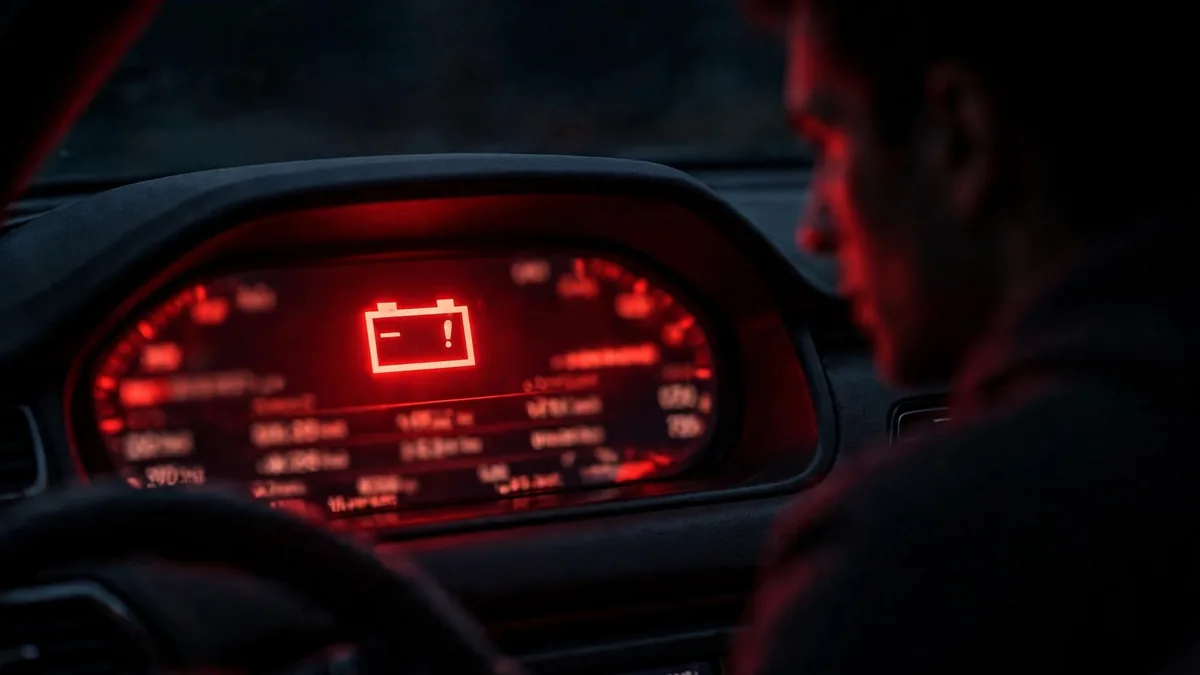
1. Red battery warning light
A red battery warning is the BMS telling you something is seriously wrong with the high-voltage system. It could be a cell failure, a contactor fault, an isolation fault, or a thermal issue. Driving on a red battery warning can worsen the underlying problem, damage healthy cells, and create a safety hazard. Stop driving when safe and contact your dealer or roadside assistance the same day.
2. Burning smell from the battery area
A burning smell, especially one that smells like chemicals, plastic, or sulfur, coming from under the car, the frunk, or near the charge port is a potential thermal event warning. EV battery fires start slow and escalate fast. If you smell burning while driving, pull over immediately, turn the car off, get everyone out, and call 911. Do not attempt to investigate the battery yourself.
3. Battery that won’t charge on any charger
If you’ve tried multiple charger types (Level 1, Level 2, DC fast charge) and the car refuses to charge on all of them, the problem is inside the car, the onboard charger, BMS, or a contactor fault. Driving on a depleting battery with no way to recharge means you will eventually be stranded. Get this diagnosed before the battery runs out.
4. Sudden significant range loss
Losing 5–10% of range gradually over years is normal degradation. Losing 20–30% of range suddenly, especially not explained by cold weather or driving changes, indicates a real problem: a failed cell group, a BMS fault, or a contactor issue that’s isolating part of the pack. This needs an OBD2 scan and likely a dealer inspection before it gets worse.
5. Battery percentage jumping erratically
If the state of charge is jumping, showing 50%, then 20%, then 45% within minutes, that’s a sign of a serious cell imbalance or BMS fault. The car’s estimate of how much energy is in the pack is unreliable. This makes trip planning dangerous because you can’t trust the range readout. Get it diagnosed immediately.
6. Car shuts off unexpectedly while driving
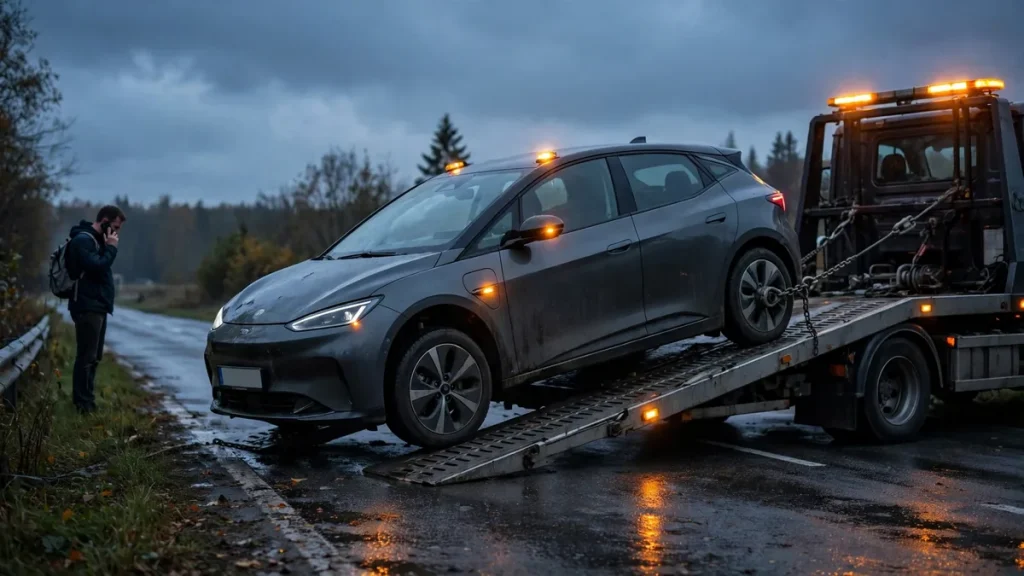
An EV that cuts power while driving, losing propulsion, power steering, and regenerative braking at once, has a critical fault. This is a safety emergency. Pull over safely, turn the car off and back on. If it shuts off again while driving, have it towed. Do not keep driving a car that shuts off without warning.
7. Charge port sparking when you plug in
A small arc when inserting the charging cable is sometimes normal on older AC chargers due to hot-plug inrush current. But visible sparking, a popping sound, or burning smell at the charge port is not normal. This could indicate a damaged port, a faulty EVSE, or a ground fault. Stop using that charger immediately and have the port and EVSE inspected before charging again.
8. Multiple warning codes appearing simultaneously
A single fault code is usually an isolated issue. Multiple fault codes appearing at the same time, especially spanning the battery, motor, and charging systems, indicate a cascading failure or a serious electrical fault affecting multiple systems. This is not a reset-and-ignore situation. Get the car scanned professionally the same day.

9. Battery health below 70% on a car under 8 years old
If an OBD2 scan or dealer report shows your battery’s state of health (SOH) has fallen below 70–80% and the car is within the warranty period, you likely have a warranty claim. The manufacturer’s 8-year/100,000-mile battery warranty covers capacity loss below the manufacturer’s stated threshold. Waiting too long to report this can complicate your claim, document it and contact the dealer now.
10. Any warning after a flood, crash, or hail event
Physical damage to an EV battery pack is not always immediately visible. After flooding, a collision, or large hail, the battery may appear fine but have internal damage that can cause a delayed failure or fire. If your EV has been through any of these events and a warning light appears, even days later, treat it as serious and get the battery inspected by a certified technician before driving further.
What Happens If You Ignore These Problems?
| Problem Ignored | Likely Outcome |
|---|---|
| Red battery warning | Cell failure, permanent capacity loss, potential fire risk |
| Burning smell | Thermal runaway, fire, total battery loss |
| Won’t charge on any charger | Stranded with a dead car |
| Sudden range loss | Worsening cell failure, loss of warranty eligibility |
| Erratic SOC readings | Unexpected shutdown while driving |
| Car shuts off while driving | Accident risk, total drivetrain failure |
| Charge port sparking | Port damage, fire at charging point |
| Multiple fault codes | Cascading system failures, expensive compounded repairs |
| Low SOH under warranty | Missed warranty claim, out-of-pocket replacement costs |
| Post-accident warning lights | Delayed thermal event, fire risk days after the incident |
Problems That Look Serious But Usually Aren’t
Not every warning is a crisis. These are common concerns that are almost always harmless:
For a related problem, see How to Find an EV-Certified Mechanic Near You.
- Range drops 20–40% in cold weather, completely normal
- Charging slows above 80% SOC, intentional BMS behavior
- Battery makes humming noise while parked and charging, thermal management working normally
- Yellow warning light that clears after a soft reset and doesn’t return, often a temporary glitch
- Range estimate varies morning to morning, normal, based on temperature and recent usage
FAQs
How long can I drive with a yellow battery warning light?
A yellow warning is a caution, not an emergency. Most yellow warnings allow continued driving for a few days without immediate harm. But “a few days” means get it diagnosed soon, not ignore it for weeks. If the yellow light turns red or is accompanied by reduced performance, treat it as urgent immediately.
Can ignoring a battery warning void my warranty?
Yes, potentially. Manufacturers can argue that continued operation with a known fault contributed to additional damage. If a warning was stored in the BMS log and you continued driving, that timeline is visible to the dealer. Report problems promptly to protect your warranty claim.
What should I do if my EV battery starts smoking?
Get out immediately. Don’t try to open the hood or battery compartment. Move at least 50 feet away from the car. Call 911. EV battery fires are difficult to extinguish and can reignite hours later even after appearing to be out. Let firefighters handle it, they have specific protocols for EV battery fires.
Conclusion
The EV battery problems on this list are not things to monitor and see how they go. They are things to act on now. A red warning light ignored today can become a permanent capacity loss tomorrow. A burning smell dismissed once can become a battery fire. Protect your car, your safety, and your warranty by treating these warning signs with the urgency they deserve.